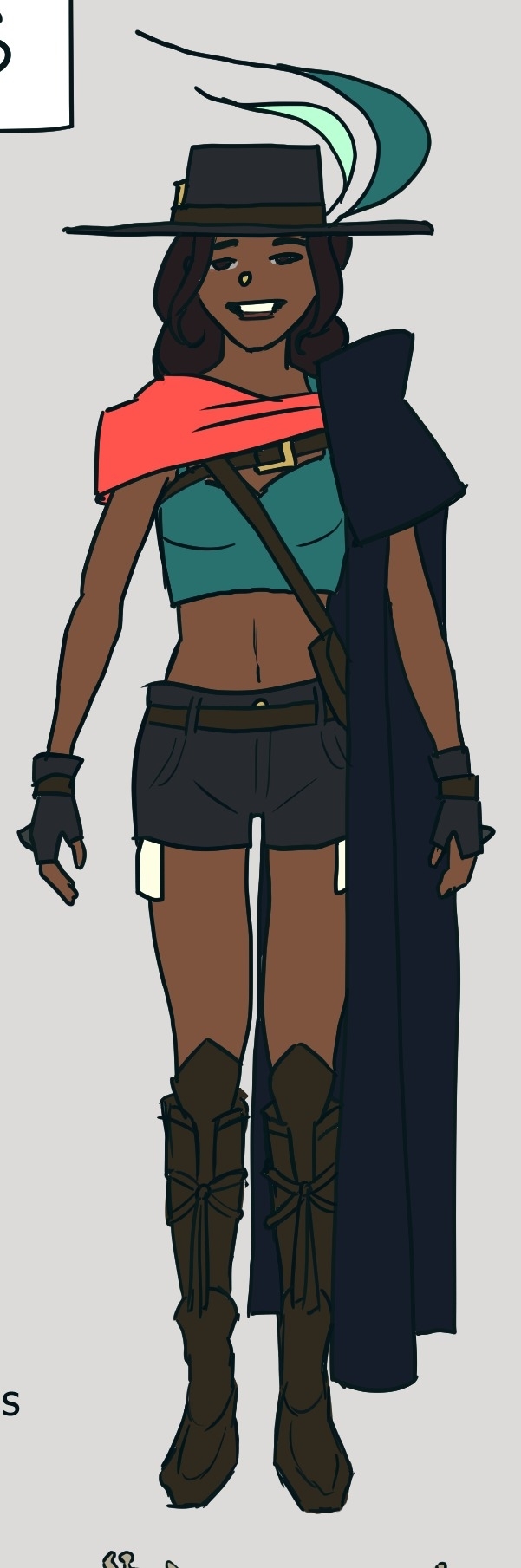
I remember Liv! Here you go 
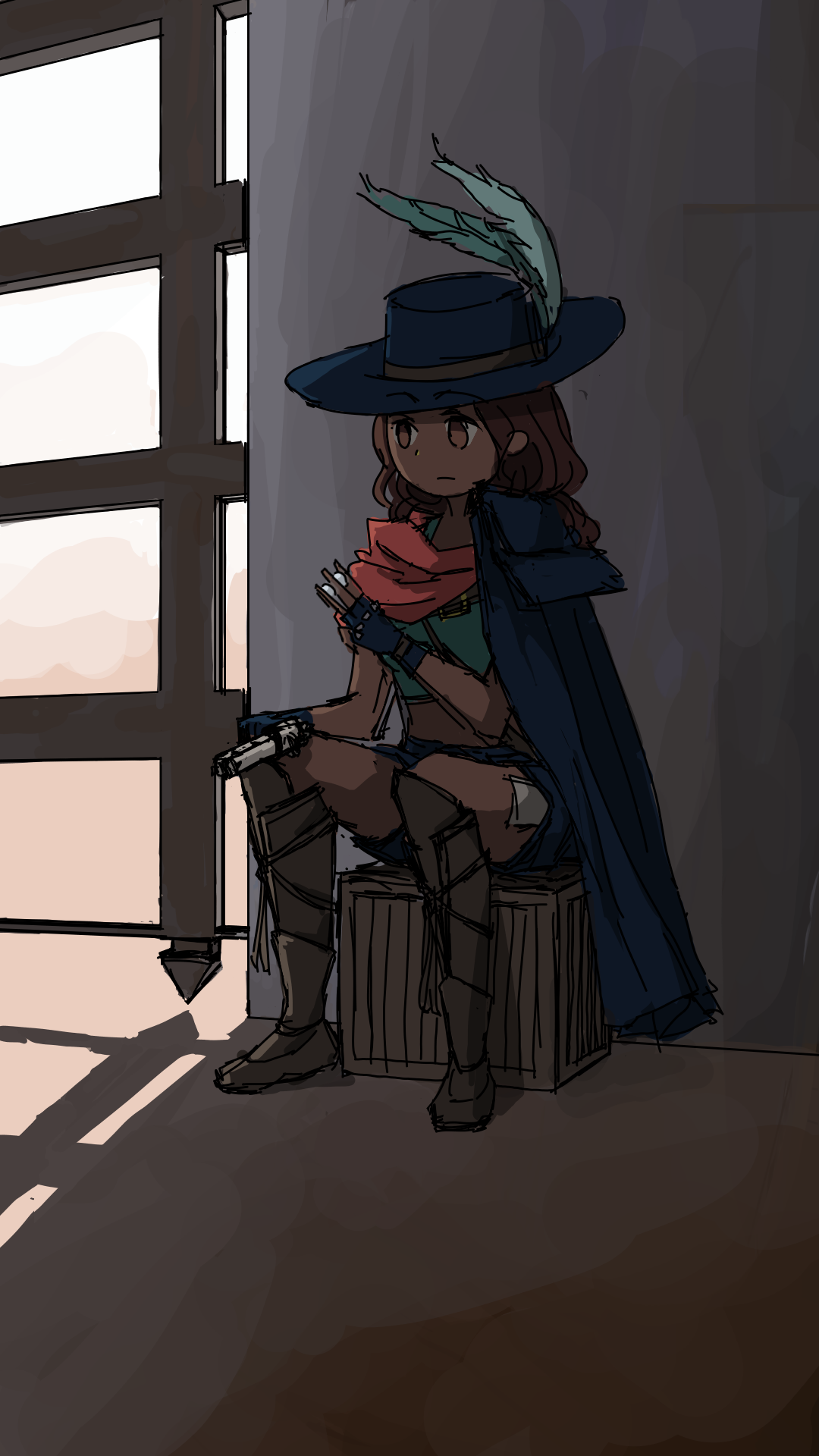
I am flattered you liked my style enough to come out of lurking for this, but also it was like 'the pressure is on' XD I hope I did her justice ^_^
My 3 questions and answers for this week:
what does a non-cofibrant bicat look like?
can't identify 1-cells. so e.g. bicat w/ 3 composable 1-cells f, g, h with (fg)h=f(gh) (that is equal, not merely isomorphic) isn't cofibrant
are all partial sanabicats cofibrant? how does saturation play into this?
reminder to self; just add witness, not witness and (id/comp) 1-cell at the same time. then it at least doesn't fall afoul of the above problem
a [non-cofibrant bicat as above] as a (partial) anabicat can be cofibrant when adding witnesses is cofibration
what does it mean for a strict map between (partial) sanabicats to be 'essentially surjective on objects'?
For all $c \in C(C_0)$, there exists\
- $b \in B(C_0)$\
- $f \in \text{Hom}_C(F(b), c)$\
- $g \in \text{Hom}_C(c, F(b))$\
- $s, t \in C(|\text{id}|)$(witnesses for ids on $F(b)$ and $c$)\
- $u, v \in C(|\circ|)$(witnesses witnessing '$fg$' as 'id${F(b)}$ and '$gf$' as 'id${c}$)\
such that (boundary conditions on e.g. witnesses (sufficient bc saturation))\
- $l_\circ(u)=r_\circ(v)=f$\
- $l_\circ(v)=r_\circ(u)=g$\
- $\text{id}1(s)=c\circ(u)$\
- $\text{id}1(t)=c\circ(u)$