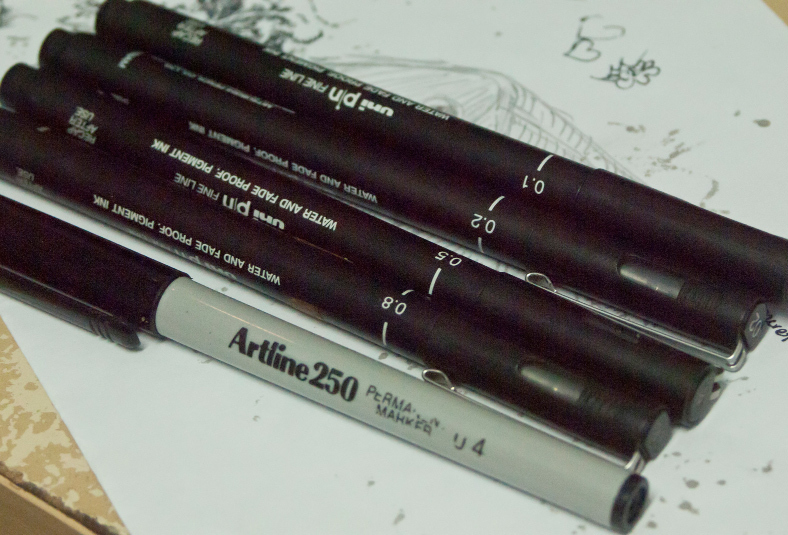
When I did ink traditionally, I used a 102 crowquill, 107, & calligraphy nib, plus a brush to fill in blacks(I cant ink with a brush, my hands arent that stable); I would also use Koh-i-noor technical pens(the ink I used was a mixture of Koh-i-noor drawing ink & Speedball super black india ink)...in later years when I was mainly doing small illustrations from work, I'd use Kuretake Millennium microns and a Faber Castell brush pen to fill in blacks on figures- I'd use a Sharpie to fill large scale black areas.
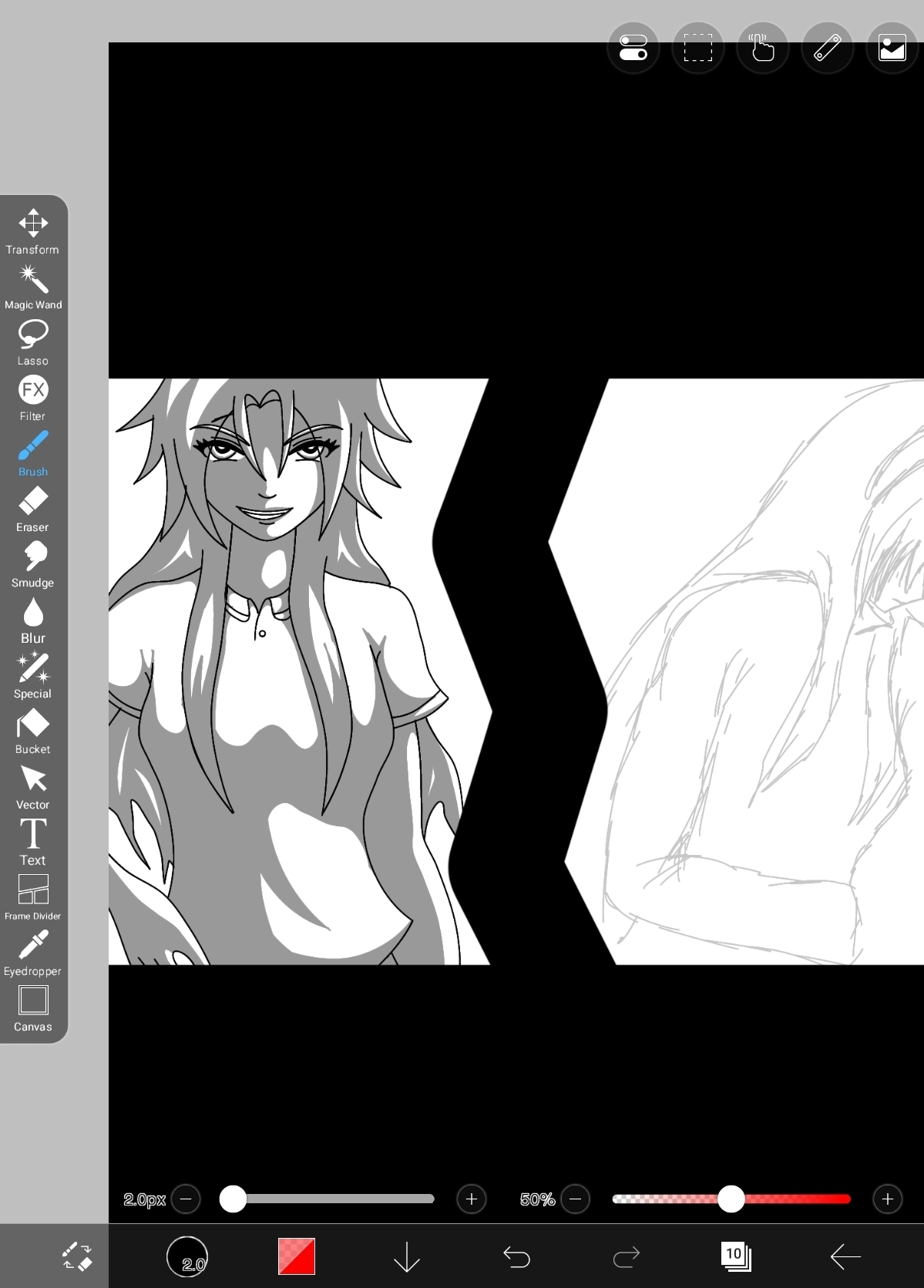
I went digital in 2015 and got Clip Studio(I actually bought the program that June and didnt start using it until December); I remember getting a commission from a peer and I saw how smooth the inks were...I attempted to use vector in 2020 but it pointed out the flaws in my work- I make like 6 million micro strokes when inking & I could see almost ALL of its inconsistency when I zoomed in on my vector work.
Plus you can't fill in the black areas when in vector mode and that was a dealbreaker for me...I went back to raster, where I had better control AND could fill in the black areas as I worked along.
I used to toggle between CSP for the drawing/inking part and Photoshop for the coloring coz at that time CSP's gradient tool was absolute shit(it has gotten better, but PS still runs circles around it), but as Adobe started to upgrade a lot more, taking away procedures I liked & incorporating AI into their programs/apps I dropped Photoshop and started using Clip Studio to do a lot more of my coloring- especially once CSP incorporated the function to convert Photoshop brushes for Clip Studio use.
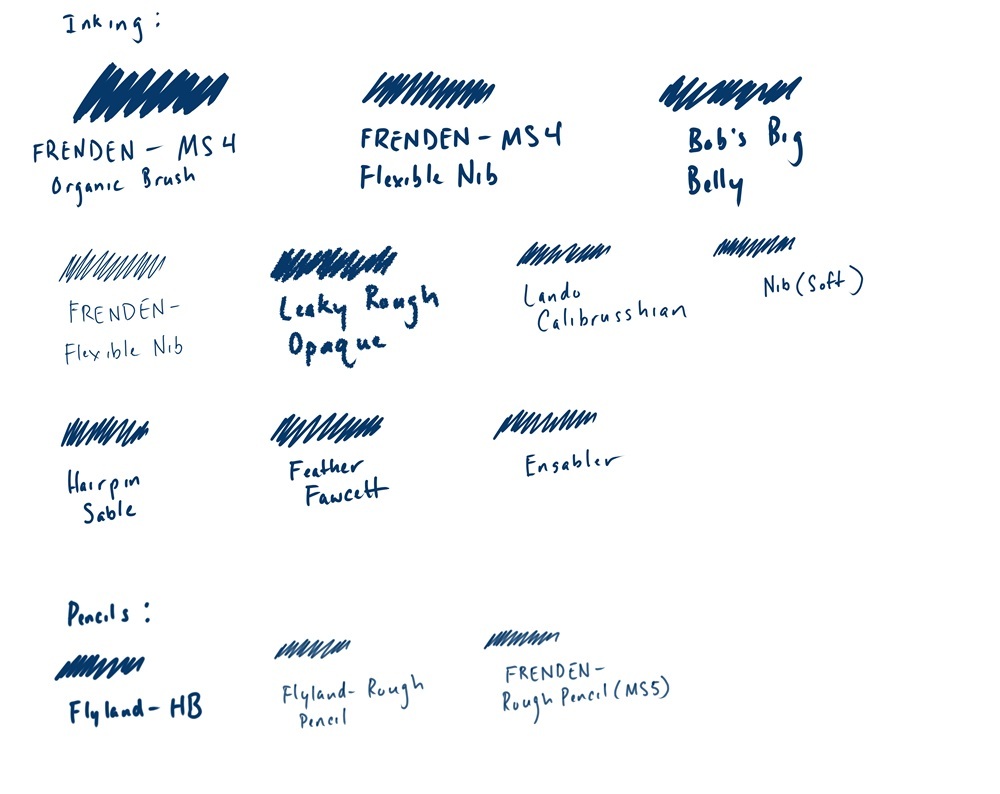
I've been using a set of Frenden inking brushes since day one...even though I've gotten other brushes with use for different things I always go back to my main staple of Frenden inking brushes. I used to do my own speedlines, but I had a set of blast/action lines that I would incorporate in to my pages; once I found templates for speedlines I stopped creating my own...one of my rules as a comic artist is to work smarter, not harder. If I can skimp on a background or make it easier for myself, I do...I also have a grainy texture brush that I use in EVERY background of every art I do; I feel like it helps "pop" my art away from the background colors by acting as a subtle noise layer(but I only use it in the coloring stage).
My pencil & inking brushes: