So, high school here is 5 years.My class focused on literature, so I had 10/12 hours of it every week.
- In grade 8th we focus on light native literature from the 20th century - poems by Asen Razcvetnikov, Valeri Petrov, Blaga Dimitrova, Dimcho Debelyanov, Nikolai Liliev, as well as some short stories and novels by Nikolai Haitov(Dervoshov's seed), Pavel Vezhinov's One Autumn day on the road, Svetoslav Minkov's The lady with the X-ray eyes(if you can find it translate it, read it - it's a really good story - it has moral elements paired with a sci-fi plot), etc.
From grade 9th till 12th the literature we study time period matches the time periods we study in History class.
Grade 9th - Greek and Egyptian mythology, the Old and New Testament, some native Medieval literature, Arthurian myths.
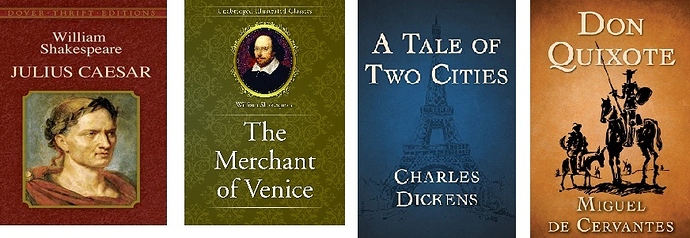
Grade 10th - Dante, Boccaccio, Petrarca, Shakespeare's tragedies(that I had to study in both Bulgarian and English), Don Quixote, Moliere's Tartuffe, Romanticism - English poets(Bairon and Shelly) and The Count of Monte Christo, French Realism - Bel Ami and Père Goriot, Russian writers - Gogol, Pushkin and Lermontov(had to read them in both Bulgarian and Russian).
And grade 11th and 12th are solely for native literature because it's part of your Literature matura's material.
11th grade - You start with Istoriya Slavyanobulgarska by Paisii Hilendarski, the poems of Hristo Botev(poet and revolutionary), Ivan Vazov(aka the patriarch of Bulgarian literature) - some of his poems, his Epic of the Forgotten, his novel Under the Yoke(which covers the April uprising), Aleko Konstantinov's Bai Ganyo and Different people, different morals. Dobri Voinikov's The misunderstood civilization.
Petko Slaveykov's Gergana(The fountain of the white legs is the literal translation of the title).
12th grade - Pencho Slaveykov's poems(Pencho is the son of Petko). Peyo Yavorov's poems, Dimcho Debelyanov's poems(All three poets die within two years of each other - Slaveykov in 1912 finally succumbing to his illness, Yavorov in 1914, after a second suicide attempt and Debelyanov in 1916, in action during WWI, with critics citing all three deaths some of the biggest loses for our literature).
Elin Pelin and Yordan Yovkov's stories, who had a feud created by the media. Dora Gabe and Elisaveta Bagryana's poems. Elisaveta had an affair with Dora's husband, however, they didn't fall for the feud created by the media.
Geo Milev's September, Hristo Smirnenski's poems and his story "Tale for the lather", Nikola Vapzarov's Motor songs(his book of poems), Song of the man, The fight is unforgiving and Farewell(To my wife). Dimitar Talev's The Iron lanthern and Dimmitar Dimov's Tabbaco.