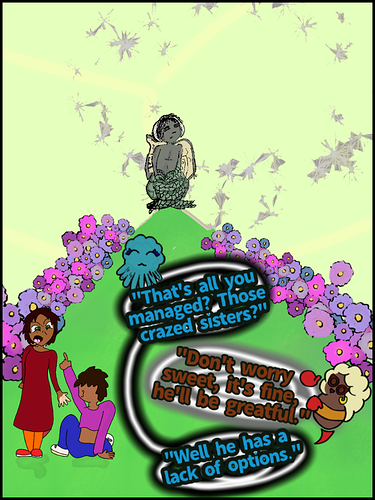
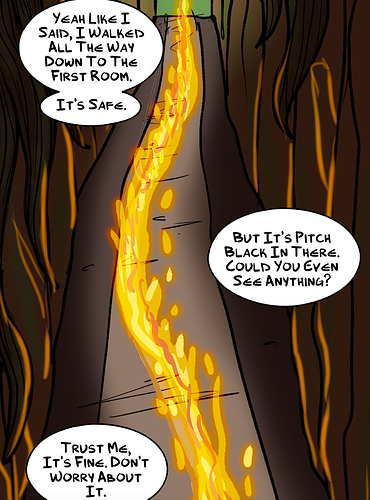
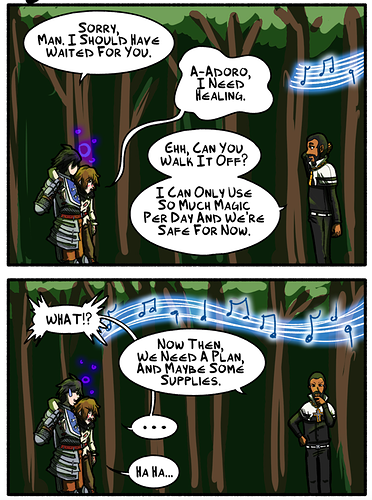
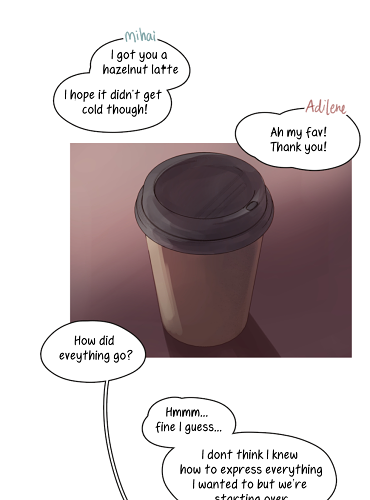
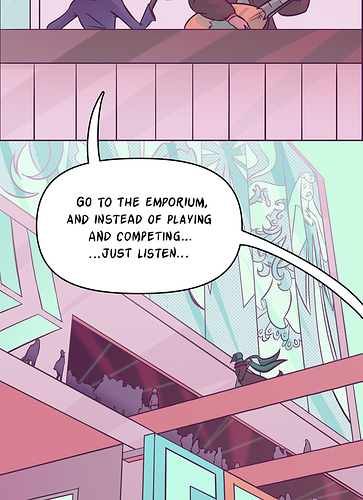
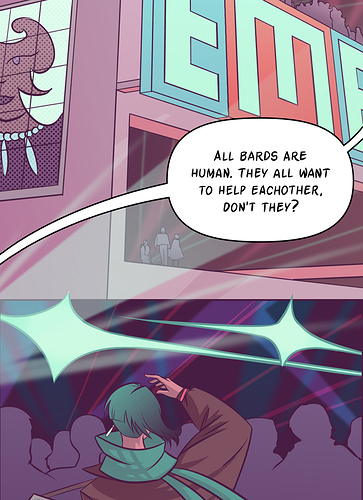
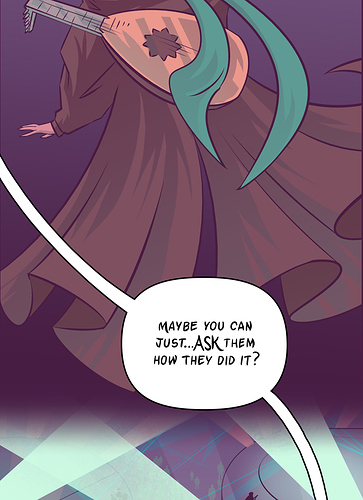
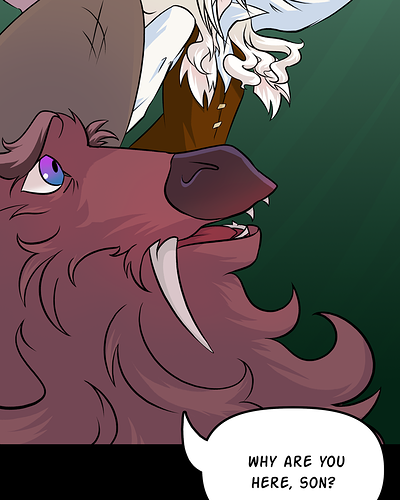
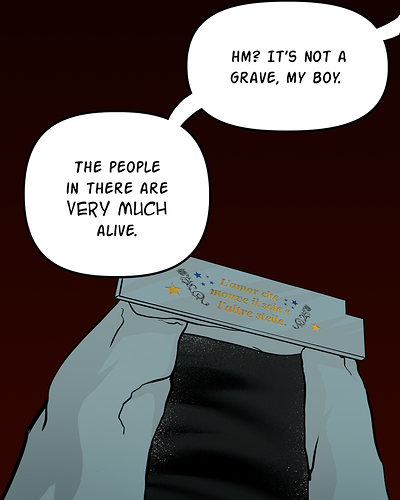
I usually have the word bubble arrow pointing at the character where he was last visible (i.e. the previous panel to the left/right/top).
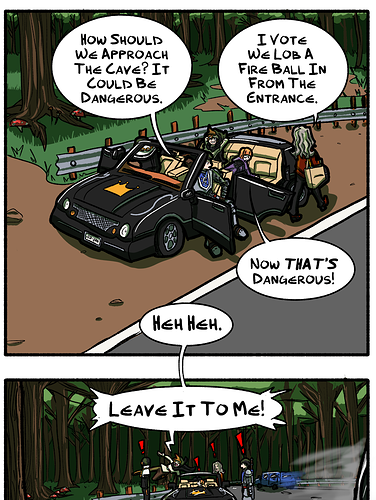
If there are multiple characters in the room and the panel only shows one character, it usually helps to have the 'invisible' character who talks to the character on screen to talk in a way you immediately realize that they're the one doing the talking.
For example: there are five characters in a room, and the 'camera' shows only the protagonist, while one of the four off-screen characters says something. If the character who says that is an elderly who often refers to the protagonist as 'my dear', I will definitely include it in her speech bubble to immediately make you realize that Nanna Lana is talking. Or, have my protagonist cutting off the off-screen character and calling him by name.
Hanso (off-screen): This is a really dangerous tactic to follow, Chambers. (Hanso and Brandon are the only characters who refer to Vivian by her last name)
Vivian Chambers: I get that, Hanso. (You immediately deduce Hanso was the one who was doing the talking).
Another solution is to have the speech bubble point to a panel where the off-screen character was on-screen a panel ago. This not only helps the reader realize who is talking but also make them realize the off-screen character retains the pose he had in the previous panel (which is normal in case they're casually talking).
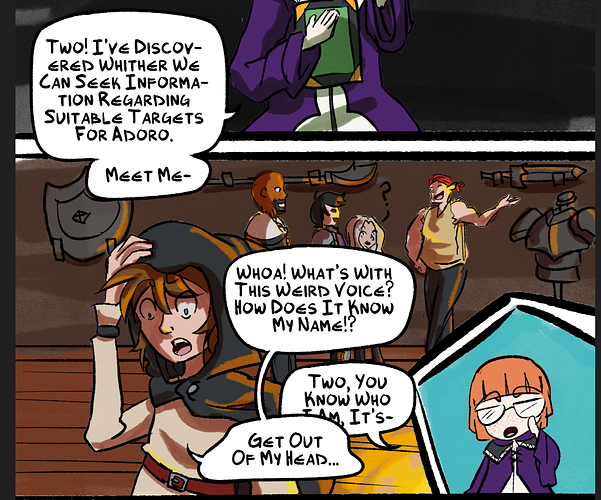
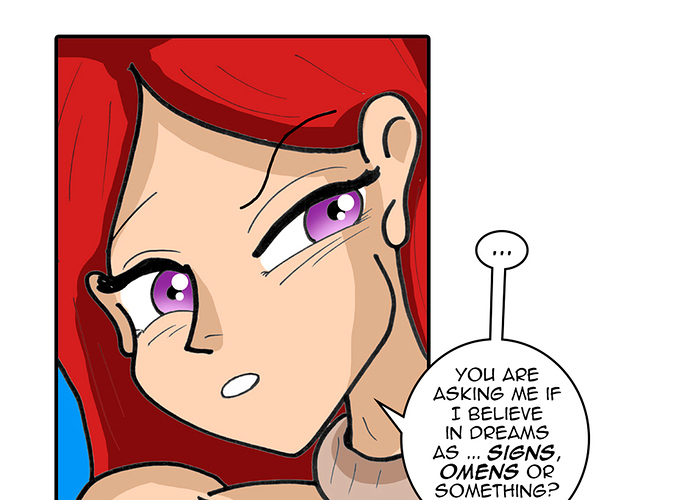
Now granted, this isn't 100% visual aid of what I'm talking about since Carol (the redhead) is in both panels, but if she wasn't present in the lower panel, the speech bubbles being connected and pointing at her at the top is enough to make the reader realize all that text is made by her.