You don’t have to be from Japan to make manga!
I'm an American making English manga -- and not to brag -- but I make money from it, too.
If you love manga and want to learn how it works, you're already on the right path.
The best way to start
is to study your favorite manga while paying attention to how it’s made.
Instead of just enjoying the story, try re-drawing a page of your favorite manga.
And notice things like:
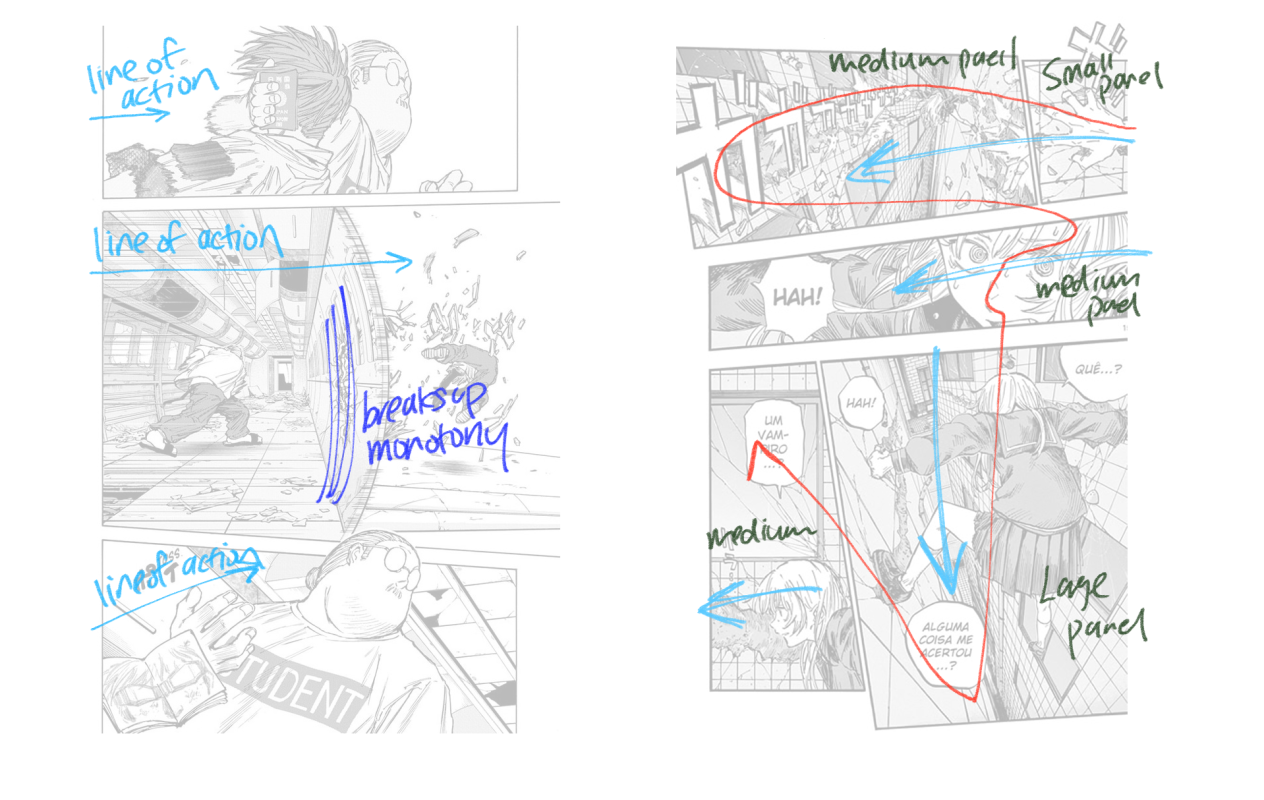
 Panels: How do they make moments feel fast or slow? What panel sizes are used for action vs quiet moments?
Faces & Poses: Can you tell what a character is feeling without words?
Story Flow: What happens at the beginning, middle, and end?
 Example:
- Big panels = Slow, emotional moments.
- Small panels = Fast action or funny scenes.
- Close-up on faces = Important emotions.
And the more you break things down, the easier it will be to apply them to your own work.
 If you need in-depth tips for analyzing manga:
More Info
(note: you don't have to do every analysis all at once. take it slow and focus on one at a time)
Break Down the Story Structure
Take notes or sketch a simple outline of a chapter to see how it flows.
- Identify the beginning, middle, and end (of a chapter or the entire story)
- What is the main conflict or goal driving the story?
- How does the pacing keep the reader engaged? (Is it fast-paced like action manga or slower like slice-of-life?)
- Look at how twists and misguidance are used if the story has mystery elements.
Study Panel Layout & Flow
Try re-drawing a page from your favorite manga to understand the panel composition.
- How do panels guide the reader’s eye?
- What panel sizes are used for action vs. emotional moments?
- How do transitions between panels affect pacing? (Quick cuts for fast action, long shots for emotional scenes.)
Analyze Character Expressions & Body Language
Cover the dialogue and see if you can still understand the emotions just from the art.
- How do facial expressions convey emotion without dialogue?
- What body language or poses make characters feel more expressive?
Pay Attention to Dialogue & Humor
Try rewriting a scene in your own words to see how dialogue impacts the mood.
- How do characters talk? Is it natural, exaggerated, or stylized?
- What makes the dialogue engaging?
Does it reveal personality, add humor, or build tension?
-
Look at Themes & Mood
What is the overall tone? (Lighthearted, dramatic, suspenseful?)
How does the manga visually reinforce that tone? (Soft shading for cute stories, high contrast for horror.)
What themes keep appearing throughout the story?
Tip: Compare different manga with similar themes to see how they handle them differently.
For storywriting/outlining,
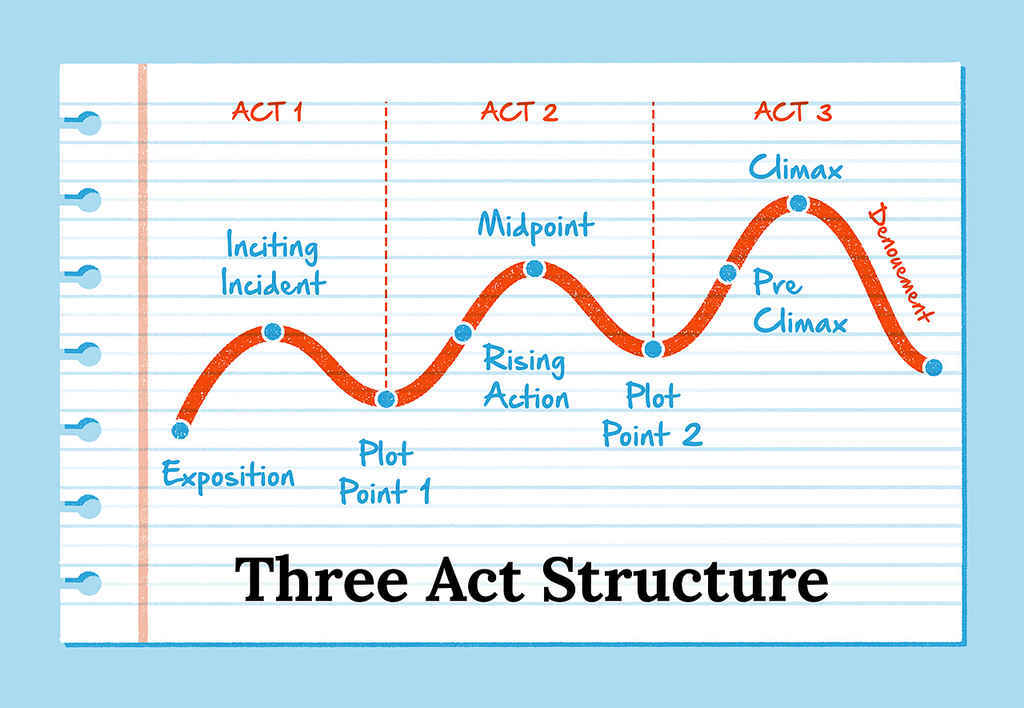
Most stories follow a simple 3-act structure.
 Beginning: Introduce the characters and their problem.
 Middle: They try to solve it but face struggles.
 End: The problem is resolved (in a good or bad way).
Here’s an example using your story:
- Beginning: Two fairies meet a vampire and get curious.
- Middle: They dress up like a vampire but fail. They also think the vampire is mean.
- End: They realize he’s actually really nice, and they become friends.
Once you have the story structure, then we can tackle the script.
A manga script
is like a play script to help you plan scenes before drawing. It includes:
 Panel descriptions: What’s happening in the scene?
Character actions & emotions: How do they move or react?
Dialogue & speech bubbles: What do they say and how?
Sound effects (SFX): Extra details for mood or action
You can use Google Docs, a notebook, anywhere you want to write the script.
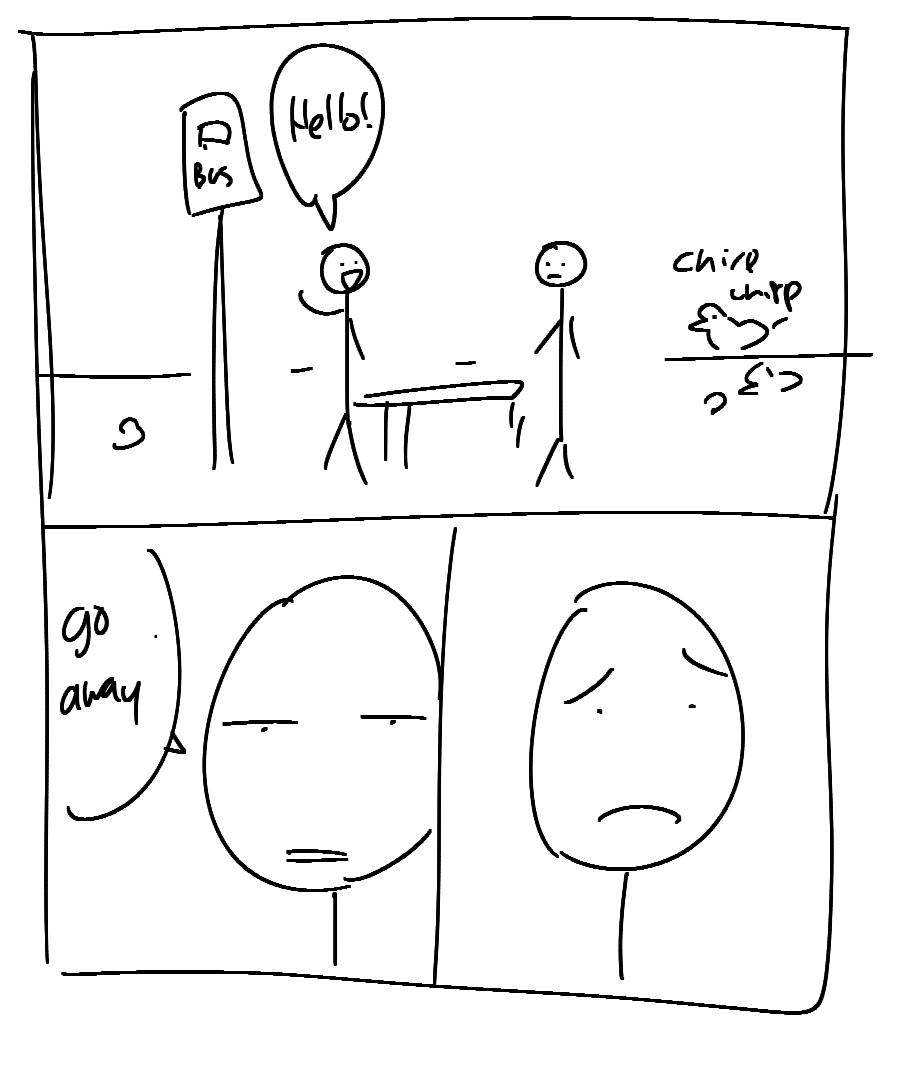
For example:
Panel 1
(A bus stop. Birds are chirping.)
SFX: chirp chirp
Jeff (smiling and waving): Hello!
Panel 2
Tim (looking like  ): Go away.
Panel 3
(Jeff is sad.)
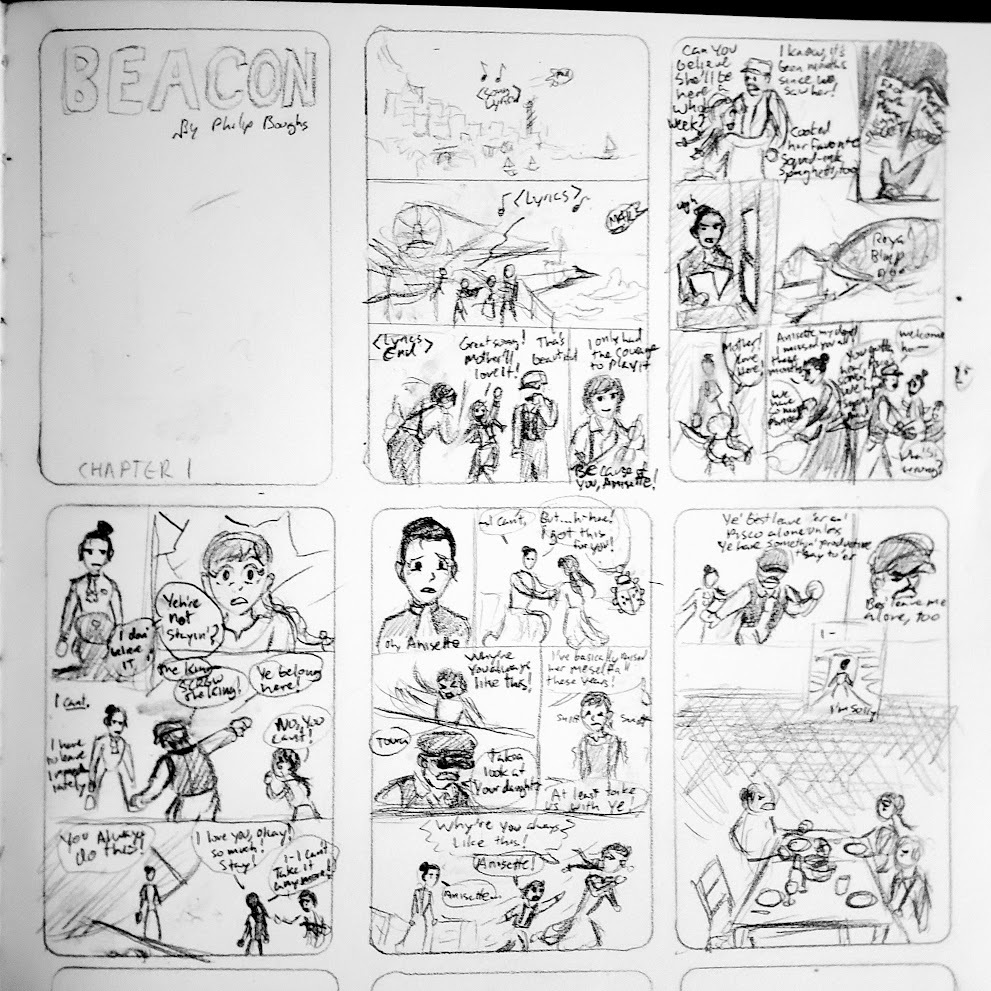
Once your script is ready, then sketch rough thumbnails to plan how the manga will look!
And don’t stress about making every step perfect.
The more you practice, the better you’ll get.