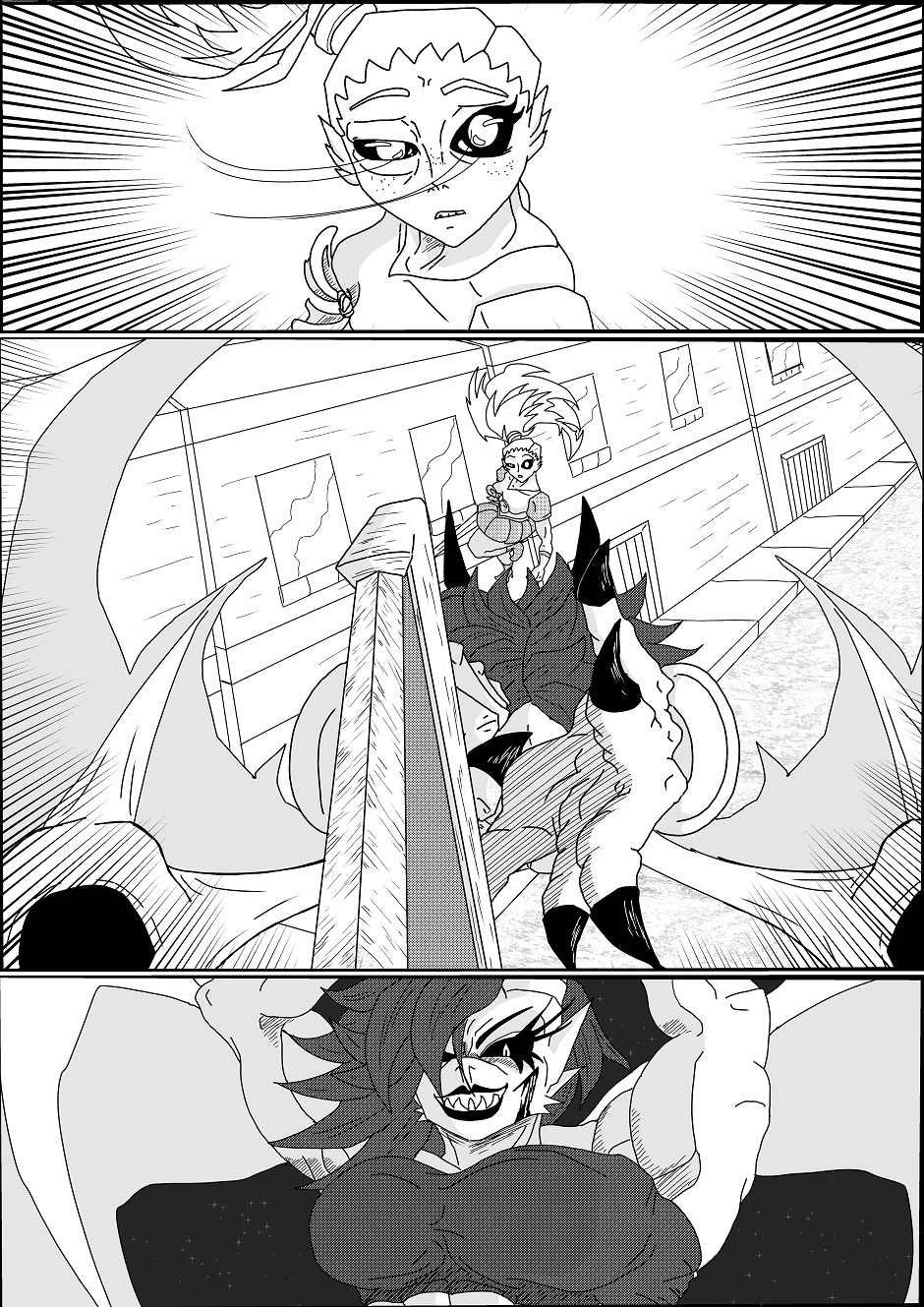
Line of action! Different people have slightly different approaches to it (I kinda see it more as a "Wedge of Action" these days), but at it's core, it functions through harmony and juxtaposition. The harmony part lies in having a "dominant" line that traces your character's movement on the page, following their head, neck, spine and one leg (the weight-bearing one, or the one directing the movement). This second part took me a LONG time to understand, but everything else on your character that lies along this line of action ALSO needs to follow it - things like musculature (you can definitely minimize/exaggerate anatomical features to fit your line), hair and clothing folds. If you don't keep your line of action in mind, you can easily mute it's effect through conflicting elements.
The juxtaposition bit comes in when you add a secondary line (typically, following the movement of the shoulders/arms, or the other leg) that intersects and "contradicts" your main line of action, to give it some spice. You won't always have it, because it's not always necessary. But it's super great for scenarios where, for example, you want to show how much power your character is winding up into their punch, or how twisted they are mid-flight or whatever.
Here's a crummy example from a few years ago:
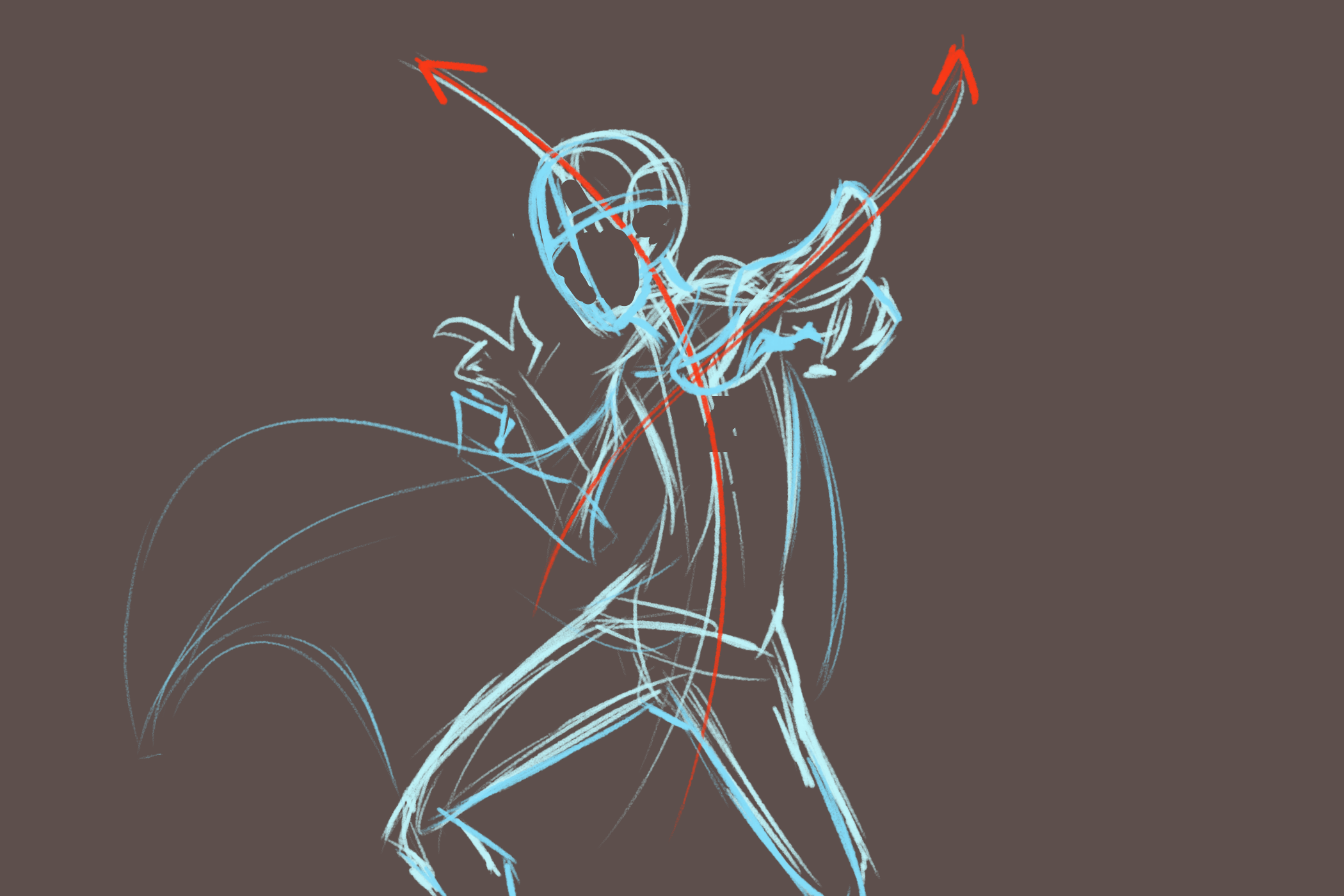
I probably could've pushed the effects of the secondary line, but you can see how the primary line traces the character's movement, and is echoed by his billowing jacket.
Couple more of some brainstorming sketches from my football obsession:
Summary
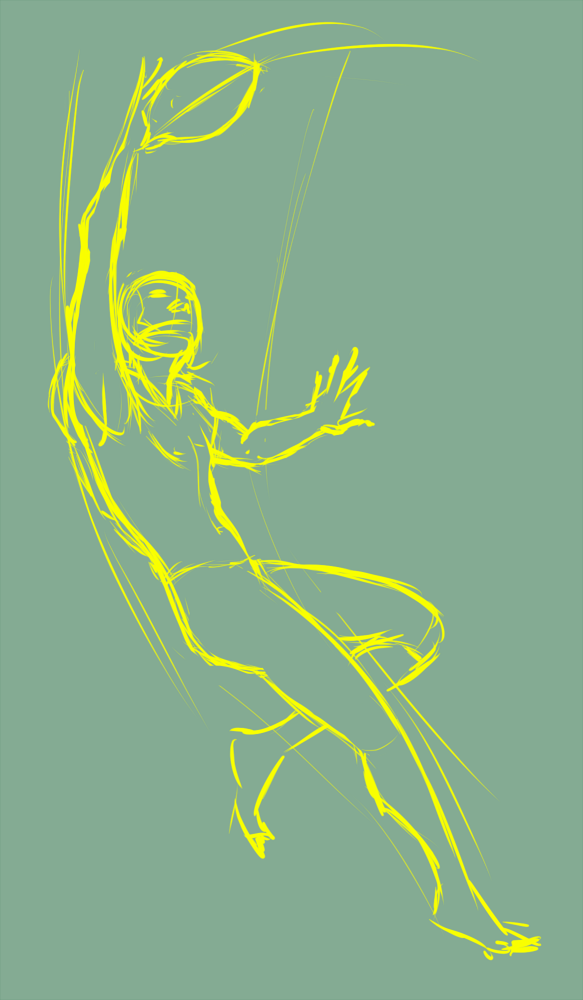
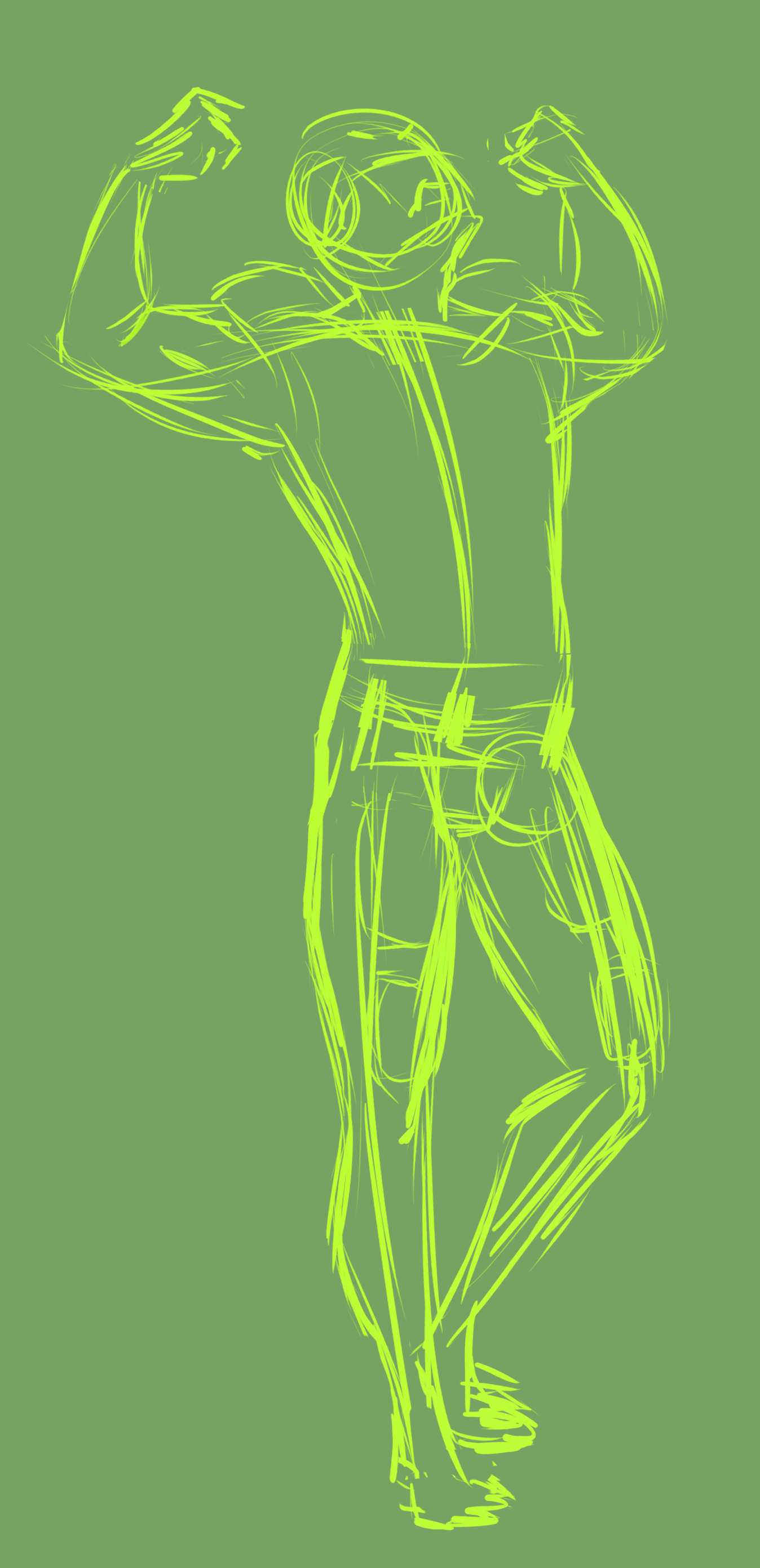
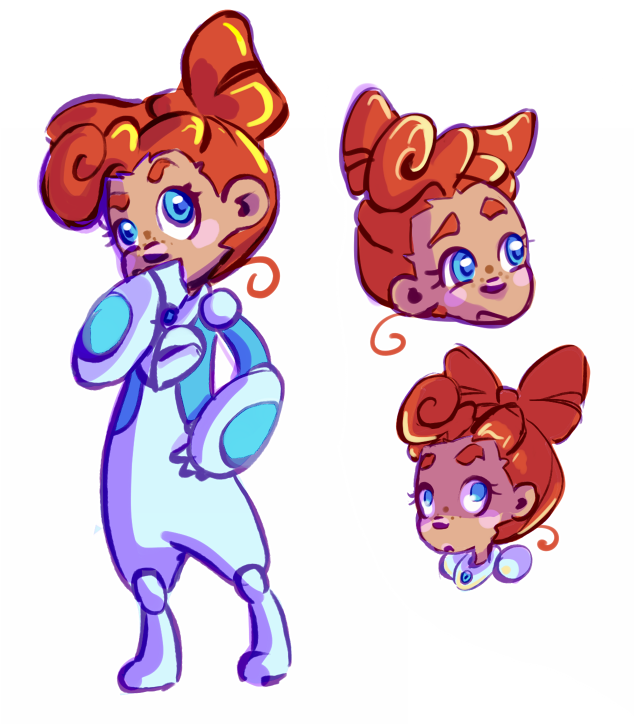
These days, in my regular cartoon style, I incorporate the line of action into the finished character art. But it is because I chose to literally define my character's bodies through it. Like, here, the line of her leg and torso is just drawn straight over my starting line/wedge of action:
If you're drawing more realistic art, you do need a greater understanding of how muscles flex and move so that you can use it to inform your line of action, which is where gesture drawings and life studies really help.
ETA: And yeah if you're looking for dynamism, the last thing you want to do is use 3D models. They do not have an anatomically-correct skeleton or musculature that mimics human muscles flexing/stretching, so they will inherently require you to have the proper knowledge to even use them. And because they're limited by their actual skeleton - which consists of straight lines to "rig" the model, you can't push movement through them without literally breaking the model (I dunno if you've ever seen any behind-the-scenes images from someone who does fantastic dynamic 3D work, but often the models will have like, hands that were tripled in size and moved 3 feet away from the body to give the final image that cool pop). They're a good starting point if you're struggling with tricky perspective, but the dynamism AND the anatomical accuracy still has to come from your brain.