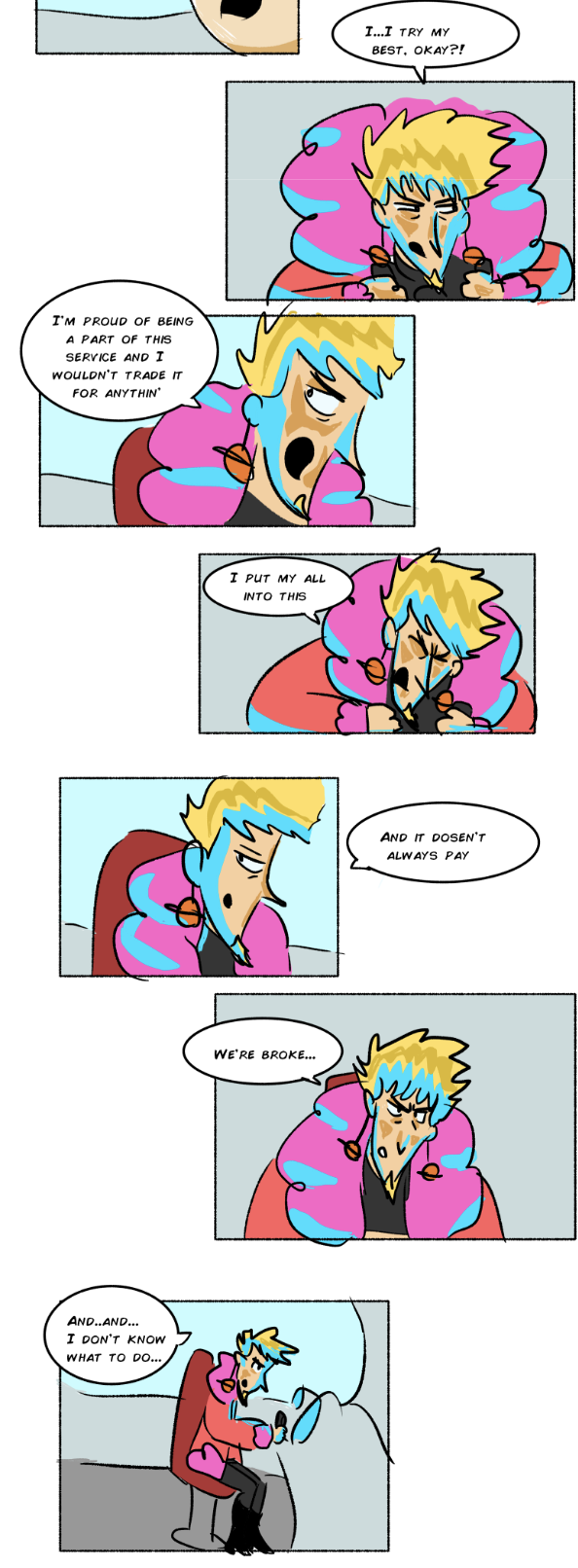
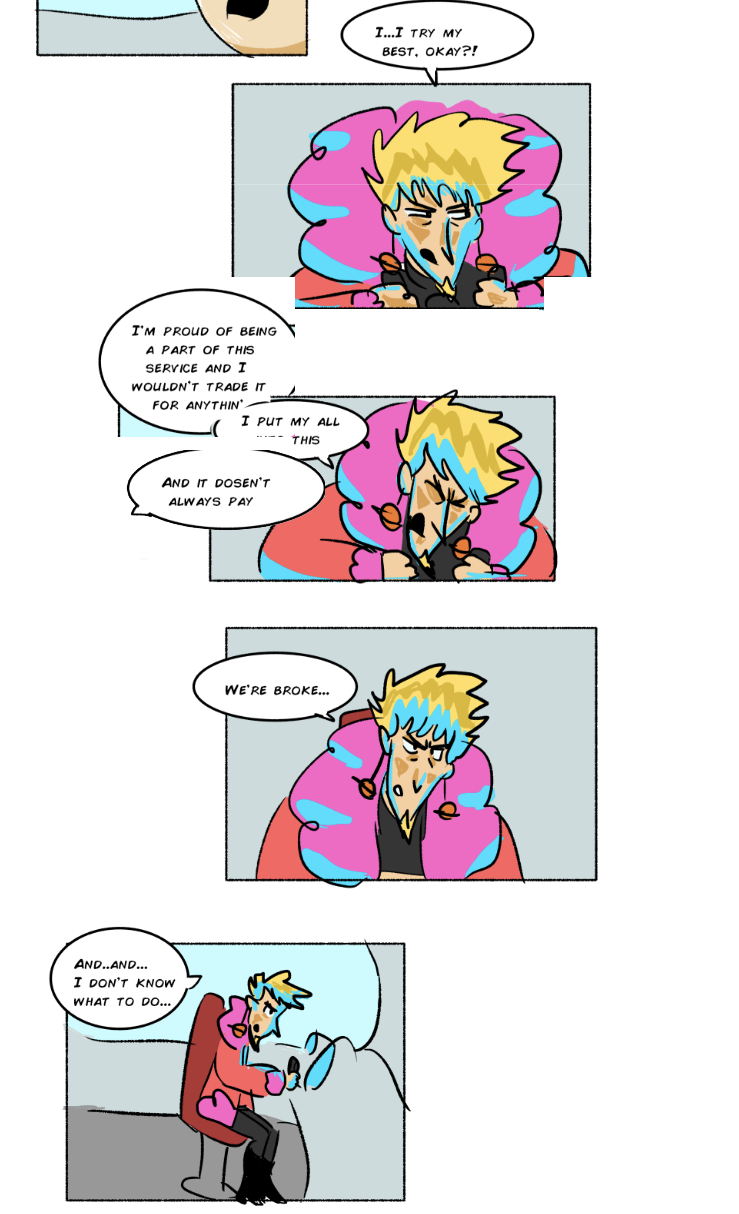
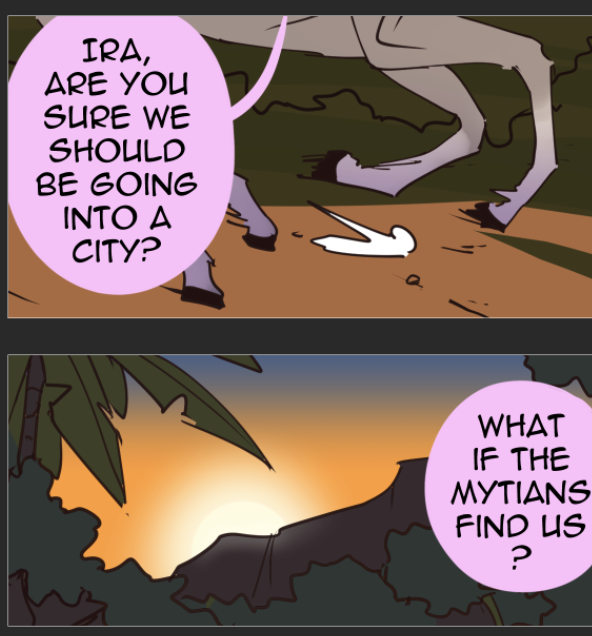
Thanks for the critique! a lot of great perspective that I'll have to digest. Looking at it, starting from episode 5, where Ira is introduced definitely would have been stronger, and I'll probably make that change down the line! The flashbacks are meant to be a bit jarring because Sao's power operates on memory, so it's him being "bounced" between his memory kind of, but I'll think of ways to make it more intentional. I'll work on Ira's character as well to clarify his actions!
Here's my critique. I read the first chapter, then skipped to the middle, then to the latest episodes because you've written a lot.
In general, I thought the comic is funny, well drawn, an the story is captivating despite me not being into slice of life. The characters are genuine, likable, and well established. I like for example, how you showed Robin being angry at Jael for ruining the computer parts-- at first he seems just hot tempered and protective of Cory, but later reveal that it was also because Robin has a crush on Cory. I like how he develops from what typically would be a goofy "best friend" character into a character with a full emotional arc.
My main criticism is in your text:
There're a bit of spelling/ grammar issues and general awkwardness, which is totally understandable for a non-native English speaker (me too!). Nothing that stops me from understanding the story, but it slows down my reading pace considerably. If you can't find a proof reader, some of the issues can be fixed if you paste your text into google doc, which gives you spelling and grammar suggestions.
Here's how I'd rewrite the comic description. Feel free to do with it as you please:
Cory has survived three years of school, despite the constant bullying and his trademarked bad luck. He has even managed, somehow, to become the President of the Computer Club... without a computer! But just when he has saved up enough money to build one, his bad luck strikes again, roping him and his band of nerds into a series of misadventures which will force them to come out of their shell.
Your dialog can be longwinded, where characters say more than they need to and over explain things. You can cut down a lot of what you've written to pace the dialog better. Leave certain things unsaid for the viewers to interpret,
For example, instead of:

You could go:
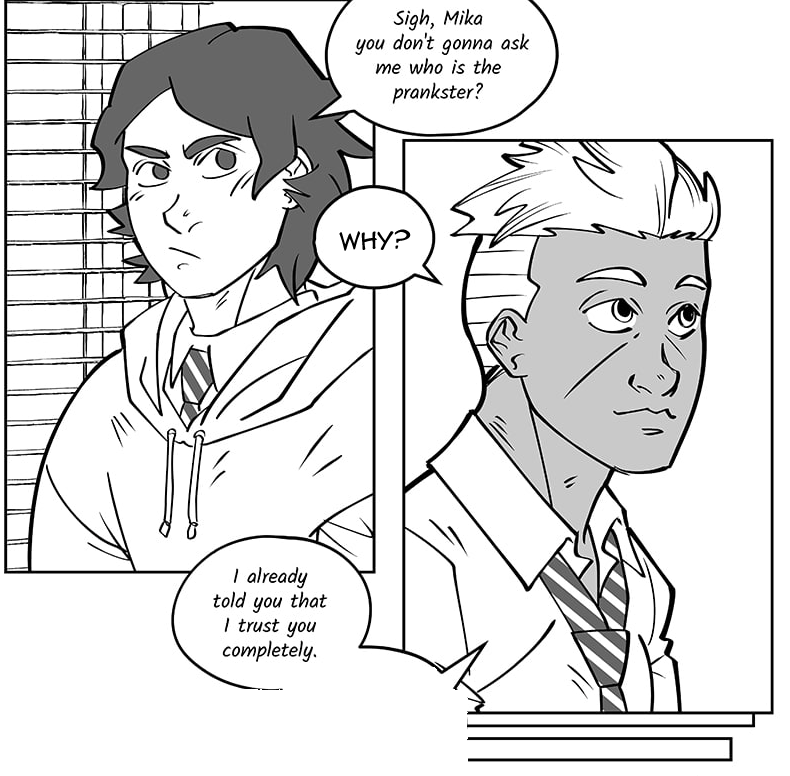
In some scenes, characters describe what's already happening in the panel or in the previous panel. This isn't necessary, because we can see the image or have already read it.
For example, the dialogues below are redundant. Instead of having them say out loud "here comes more bots!" and "quick! enter!!!" you can just show it in a drawing. The dialog would be better use for characters to make jokes to show off their personality. Something like "get out of my way!" to show that the character is selfish or "eat a door, robots!" would be more memorable.
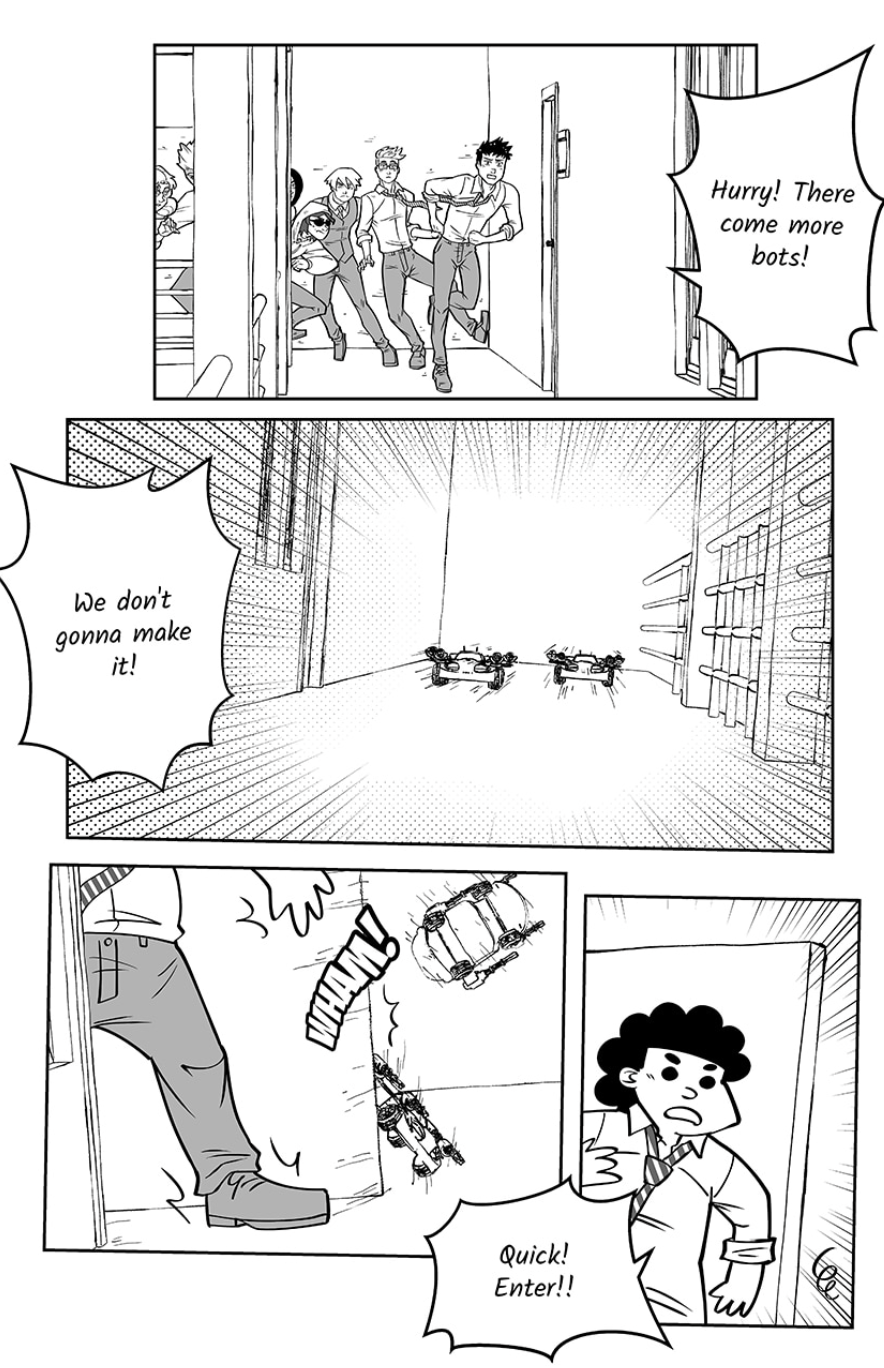
A related issue is that you sometimes tell instead of show and some dialogue lacks subtlety. Character say outloud what they feel. In emotional scenes where characters spill their hearts out this is good, but you should also try writing dialogue that has subtext-- hinting at feelings and thoughts. Use your art-- character expressions, composition etc-- instead of having them say it. This is a big issue at the beginning of the story, but it gets a lot better as the story goes on. Still, it reappears sometimes.
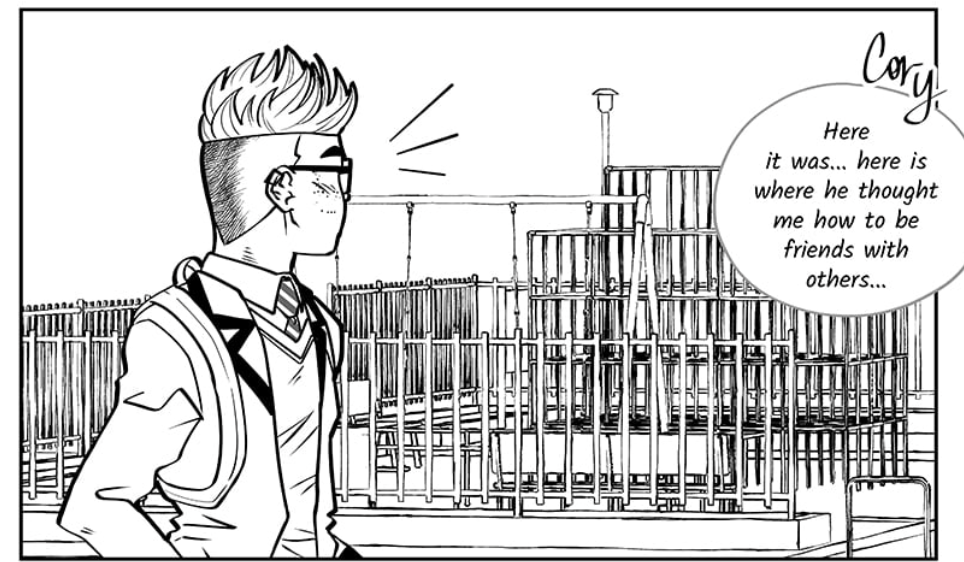
For example, if you have shown this play ground as a significant place for Robin and Cory earlier, and emphasize it more in the panel, all you'd have to say in your bubble would be "here it is..." and viewers would know why Cory walked here.
It's ultimately about having tight and efficient writing. Every dialogue should provide new information about story without repeating the image. When you write your dialogue, I recommend looking at it again and ask yourself "is line really necessary?"
Here's one of my favorite movie scene of all time. Both are trying to figure out if their spouse is cheating on them. Neither of them actually say "oh no, my spouse must be cheating!", but we understand through their conversation about shopping, the acting, and the camera movement.
Thanks again for the review. The best part of your story is seeing how much you improved in all of these aspect as the story goes on!