As of today I don't really like NFT, basically because they don't have utility other than speculation. At the end what you "own" is in most cases just a link to an image which anyone has free access to. I understand why people are interested in them, they seem an easy way to monetize art, which does sounds appealing, but I believe the ones making money are just a few lucky ones. And most of people just buy them to sell them at a higher price, not because they appreciate the art (but that can apply to regular art and physical goods too).
I think they can have potential if they are given some actual utility. For example giving some bonus content to anyone holding a specific NFT, like early access, discounts, etc. But then I'm not sure if NFT could provide any improvement to current solutions or if the utility would justify the overall cost of using NFT.
Besides utility, then there are other concerns like the environmental impact and the scammers/thefts. For one side it's true there are scammers, but that it's not exclusive to NFT. Being NFT, twitter or a blog, anyone can steal any content you put on internet and claim it as theirs. So in this matter I don't really see a difference. Yes, it sucks if someone else tries to make money with your content but in most cases there's nothing you can actually do to prevent it (fortunately my content is bad enough that I haven't experienced this, as far as I know).
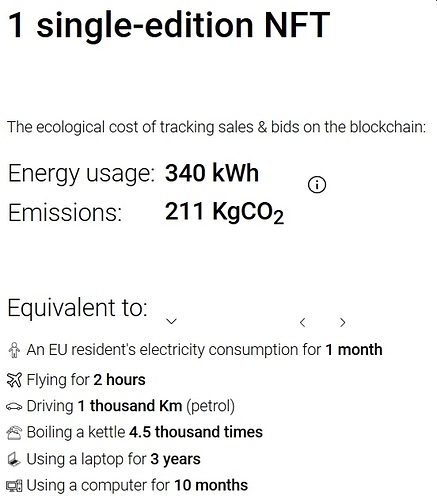
Then what it seems to be the main reason against NFT, the environmental cost... It's a fact that NFT, and crypto in general, have a significant impact. There are numbers about how bad crypto is, but how does it compare to the power consumption of tapas, webtoons, patreon, instagram? (maybe NFT is worse, but some reference is needed to put everything in perspective).
At the end it's difficult to compare as, while you can find some numbers here and there, I don't know what it is actually taken into account or how reliable those numbers are. For example a study said a single bitcoin transaction consumes as much as 1000 VISA transactions, does that takes into account the power consumption of banks, ATMs and everything the banking system, and therefore VISA, relies on? I'm not here to defend crypto, just saying that things might not be so black or white.