I don't get what the deal is with tropes. They are fun as heck and appear naturally in the creative process.
When you want to learn about tropes, it should be in an analytical type of way. Because it's an actual part of literary analysis.
You don't learn this stuff as a tutorial to "write better." You learn this stuff so you can get a better understanding about creative works, which usually leads to you understanding more of your own process.
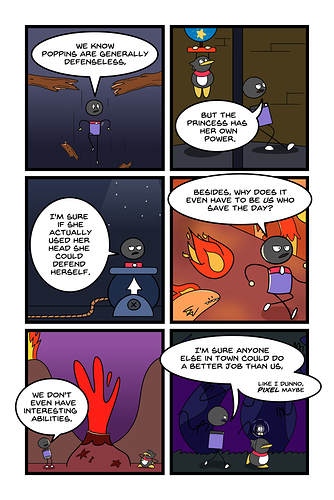
In my case, understanding tropes has helped out tremendously with my comic, thank God. A lot of it relies on parody, so being able to repeat clichés, rhetorical devices, templates, etc. (which all fall under the definition of a tropes) effectively leads to a satire that makes sense. If I did not intentionally do this, no one would understand that JumpHero is supposed to be set in a videogame-like world.
I mean look at literally pages 6 and 7 of the entire series.
You don't even need to read the series description to understand what this means, and I think that's why people always have good things to say about this particular spread.
So yeah, that's my regularly scheduled defense on tropes and what learning them actually means. Like this thread topic is saying: it's not a yes trope or no trope situation, but rather if you understand the cultural context behind them and how to use or change them properly.
I highly suggest dumpster diving through TV Tropes whenever ya'll get the chance (I think new creators definitely need to try this out). One, because that wiki is very good at clearly explaining how tropes, literary devices, and genre conventions work to the average person, but also because it's really fun, especially when you're reading about media you like. Definitely go do it (and if someone would like to go through the effort of making a page for JumpHero, I would not stop you  ).
).