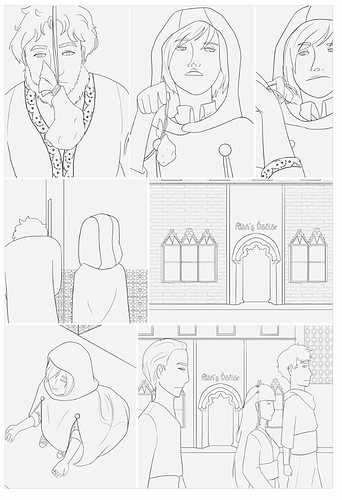
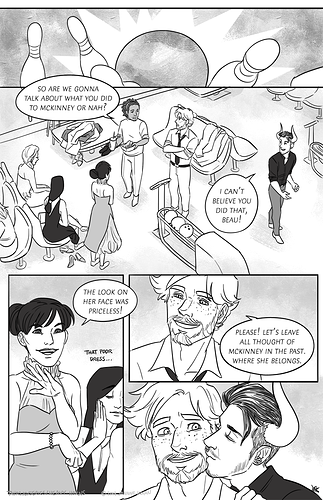
I do grayscale so I feel you. Grayscale is an artform in itself though, and while it's way less time consuming than coloring the whole thing, quite a bit of work has to go into designing it so it still flows without relying on color to guide your eye. I've been using digital screen tone and that's been a fun thing to learn and looks really neat when it's right (though there aren't too many tutorials on design rules with screen tone so for me it's been a learning experience of trial and error). And personally most of the comics I tend to like have few to no colors at all.
But, I do think that if you don't want to do color, you have to really think a lot more about dynamic layouts and really expressive characters. When the color isn't there to light a scene, your linework has to do all of the heavy lifting. Coloring and rendering hides a lot of linework flaws. Can't hide anywhere when it's linework.
There are some things you might want to check out if you want to go into color, though. Like there's the plug in "MultiFill" plugin for Photoshop (I can't use it because I hate closing lines, but I think it would work for you) and Clip Studio Paint has autofill abilities that work pretty OK.
Here's the link to the plug-in because a lot of Photoshop people don't know about it, and it's pretty good. Multifill is free, and FlattenPro (which is REALLY useful for comics) does cost money. But Multifill is free.
https://peltmade.com/psplugins-flatting.html
Only issue with Multifill is that it does require a line without any gray but most comic people draw like that anyway.