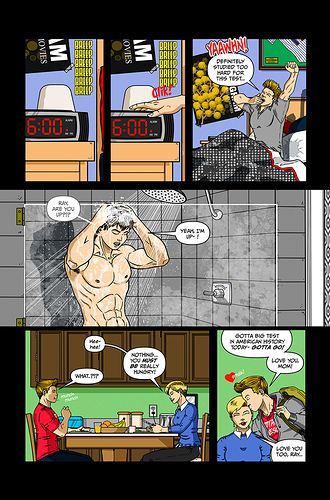
I'mma give you the same advice I give everyone on this board: Do not draw backgrounds.
Backgrounds are for suckers. They are boring, flat, soul-sucking, and un-fun to draw.
you don't draw backgrounds.
you draw environments.
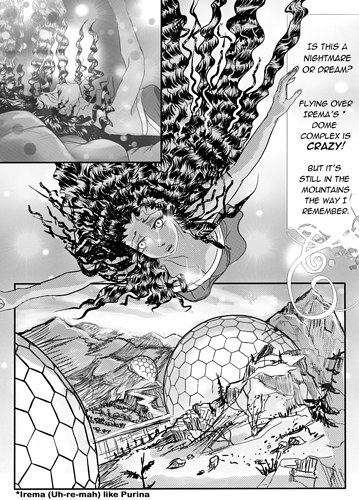
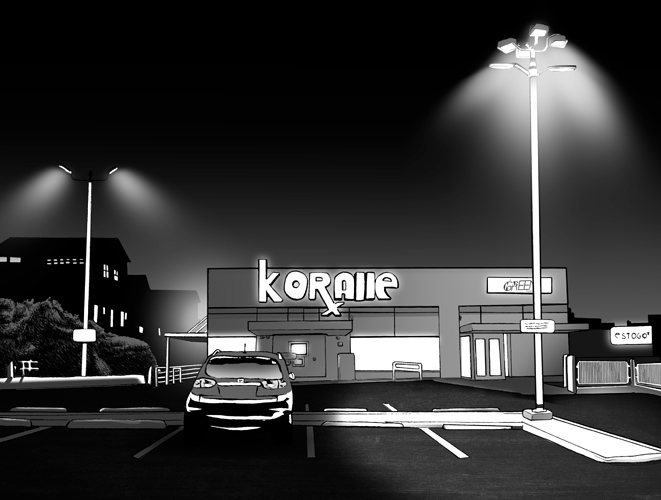
The place in which your comic takes place is as much, sometimes more, of a character than the actual characters in your story. Backgrounds exist behind a character. Environments exist behind, above, below, in front of, and to either side of that character.
Don't draw an environment because you have to have one. Draw environments because it tells your reader more about the world, the people, the events, and the personality of your comic. Think about the places where your comic is taking place.
A forest? Cool, what KIND of forest. Are the trees neatly and evenly spaced, or bunched up in a gnarled mess? Is there grass on the ground, or is it a thick blanket of dead leaves? Are the trees healthy and strong, or wiry and dry? Bushes? Vines? Wildlife? Dark and moody, or bright and sunny? What sort of mood are we supposed to feel from this forest, and how does the look and design of it contribute meaningfully to the story?
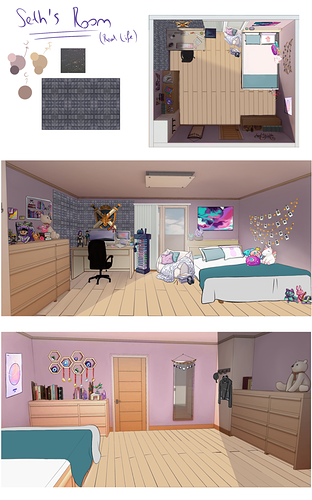
Bedroom? Cool, who lives there? Are they a neat freak? Messy? Ostentatious? Spartan? How often do they do their laundry? Do they collect anything that they show off on their shelves? What about a desk or computer? What kind of posters do they put on their wall? The room is going to give you all of that information about its inhabitant and more, so use it to tell your reader something important.
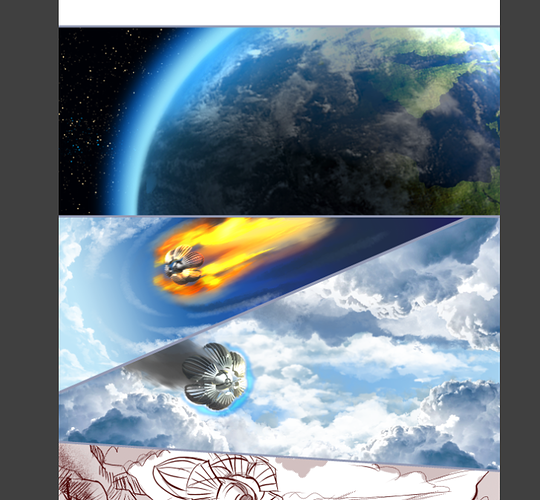
Spaceship? Awesome, what sort of spaceship is it? Clean and pristine and super-futuristic, or a cobbled-together mess with exposed wires and pipes everywhere? Is it meant for people to actually make a home out of, or is it purely for utility with no bells and whistles? Is there some sort of special technology that makes it function? How does that affect the look of the ship? What sort of elements you include in that design will shape how the viewer sees the ship, what it's used for, and whether they want to stay and look around, or leave and run away.
I could keep going with examples, but you get the idea. When you treat your locations as a character, and draw them in the same way, with the same sort of attention and care that you give to the characters, they become a lot less painful to draw: They become another tool for helping the reader to understand your story. Always think in terms of how you can show your audience more about the world and tell them more unique, interesting things about the places they're seeing and the people who inhabit them.