Read this book. This book is now your bible.
your three questions are honestly irrelevant: you're missing the forest for the trees, if you will.
How many words you write, how much of a backlog to maintain, and how to panel for vertical vs. page format are all very surface level issues that you're going to have to just feel out on your own.
I personally don't write a script at all. I basically storyboard the comic in my head with a general understanding of what needs to be done/said by the characters, and then figure out the details as I'm drawing it because I have an easier time making those decisions when I actually have the art laid out in front of me.
Other artists write a full outline, panel-by-panel breakdowns with detailed descriptions, all in a very structured format to make sure everything is determined and ready to go ahead of time.
Those are two opposite extremes on a spectrum, and you can do anything inbetween based on what's most comfortable for you.
Keeping a backlog or writing ahead of what's posted is more of a marketing question than an artistic/creative one. If you're just doing this for the love of the craft, then don't worry about it: post what you've gotten done when it's done. It is better for your story to exist than not exist, so make it exist. Regular upload schedules are for when you're trying to make this your job and garner an audience of reliable readers, which comes AFTER you've gotten a handle on the creative process of it all.
Don't think about what's 'right' or 'proper', think about what tells your story the best.
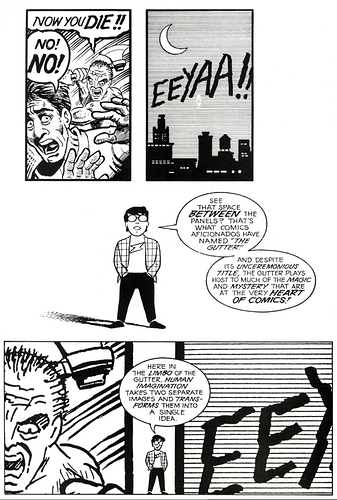
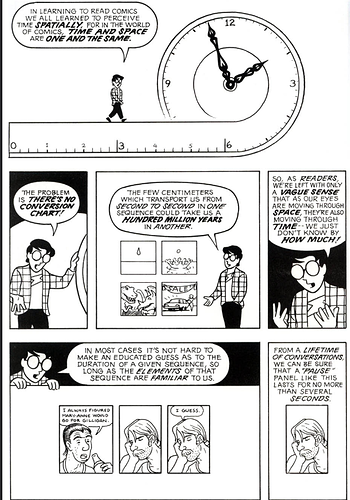
In the PDF I linked above, Chapter 3 in particular focuses on the nature of comic panels: Each panel is a single image, and they're placed next to one another in order to create a relationship between them.
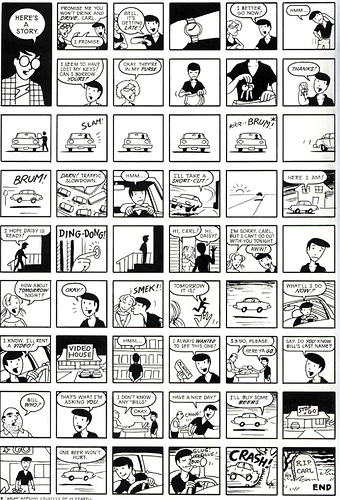
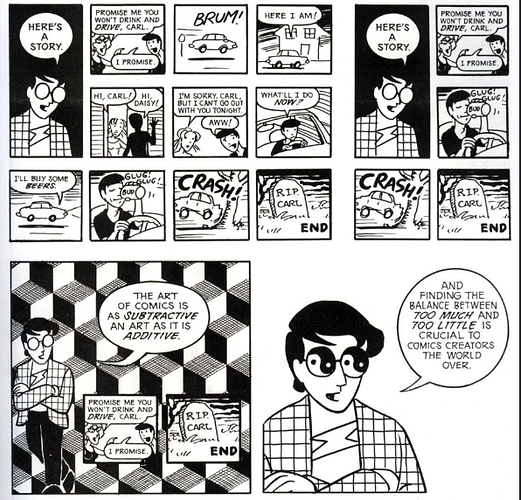
The space between your panels is where the comic actually happens, the panels that you draw are merely snapshots creating a guide for the reader's mind.
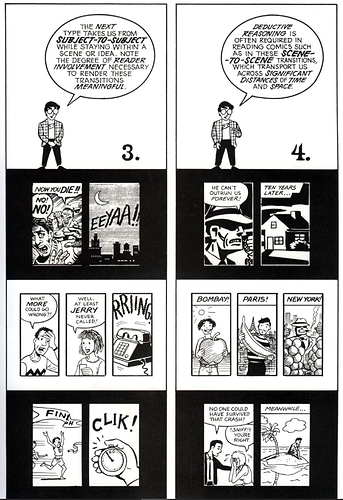
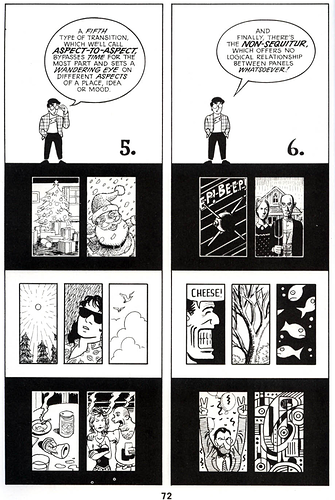
Here, McCloud outlines the six different kinds of panel transitions that he's identified, covering pretty much all the bases for what kind of relationship 2 panels can have with one another. Understanding and making use of these is going to get you a lot farther than trying to think in terms of format and 'how to panel' for vertical scroll vs. page-by-page.
Choosing what to or not to include, which kinds of transitions are important to use where, and what those transitions mean for your story is what's important to figure out.
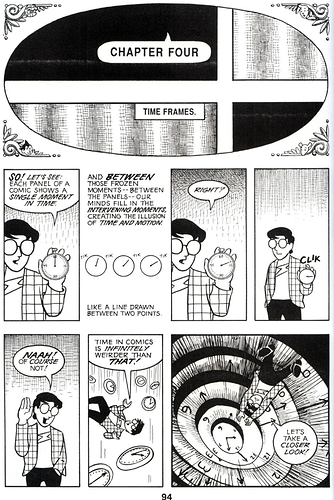
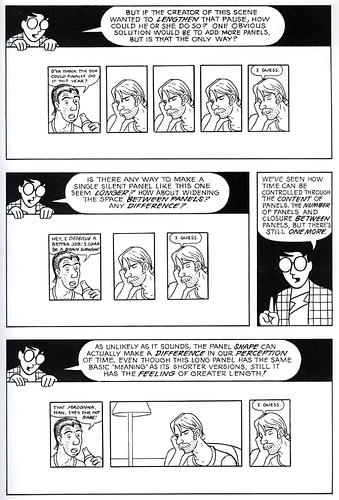
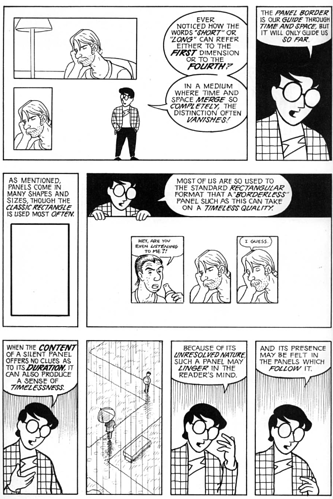
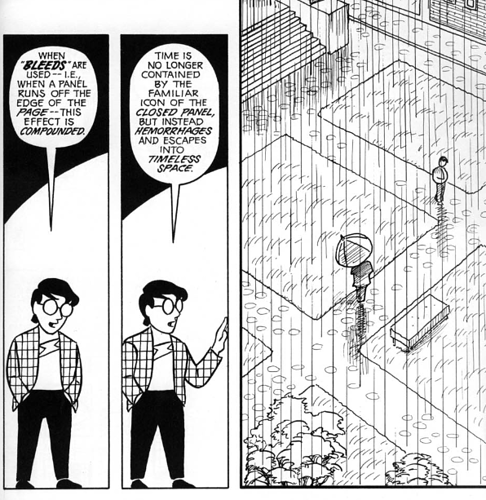
Chapter four elaborates on this further:
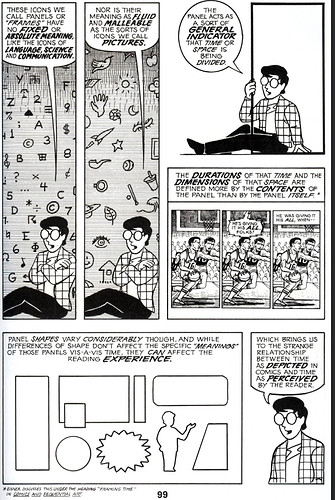
The most important function of laying out your panels for your story is flow, pacing, and time. Focus on the relationships between panels and what they mean to one another, and you'll be much more able to figure out how to make your comics 'flow' naturally.
Panel shape, spacing, and size aren't some fixed structure that you use for the purpose of constructing a page or episode, they're a fluid and versatile tool used to construct a narrative, so use them as necessary, fuck with the 'rules' a little. Focus on the story being told, not the format it's being told in, then bend, twist, and manipulate that format into doing what the story needs.
Seriously just go read this whole book, it's absolutely essential for comic artists, and free to download from that link.
I know this isn't exactly what you were asking for, but I feel like this is the more important question to answer. Comic panels, pages, strips, episodes, etc. etc., they're all just tools we're using to tell our stories. As the artist, your job is to make your tools do what you want them to do, not limit yourself based on what you think the tools are capable of or 'supposed' to do.