I find that every story is different and I find myself using different methods to plot each one of them, including some people have already said above. I thought I'd give it a go and say what I usually do and them some thoughts, some food for thought and stuff, that may help you see things from a different angle (or just complicate it more, in which case, you should forget it! haha)
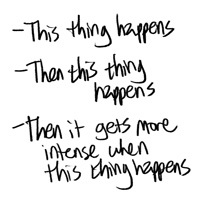
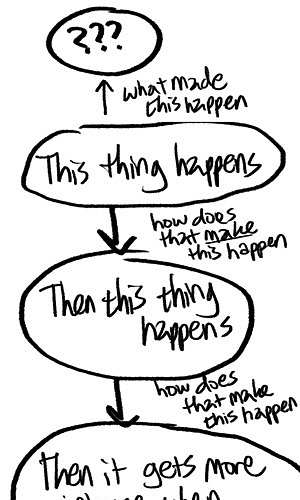
Knowing your format is key. Will your story have chapters? Will it be just pages in a big story? What I usually do is, first, I write a short synopsis for each chapter of my story. I usually skip writing a synopsis for the whole thing, but it may help. Then, I write a short sentence for what happens in every page of my chapter, breaking down the pacing, and then I like to write the dialogue on it before writing the panels, finishing it. That's the basic of what I usually do (for example, in my Tapas series, I usually write panels first and them complete with dialogue). You can do it one step at a time, this happens, which causes this to happen, which causes this... Also never forget that a plan is just a plan and they change, so if your gut says to take a risk when the time comes to draw a chapter, or to create an extra page between some, do it! Improvise! It's what makes writing so exciting! I know it can be frightening, I'm always scared shitless, but hey, that can be the cool part!
I'm used to think in terms of structure and less in terms of previous background. When you break your story, slowly, into parts, you start to organize it. I usually do very little work in character before the story and I'll say why below. I agree with yonsseo, you should always ask questions. Is the pacing flowing? Are things happening? If not, is it important to take this breather? When you see the outline for your chapters, are people undergoing a character arc? Do this character even need to? (in the words of Max Landis, character development is not the only way. He mentions Han Solo: he doesn't really change with the movies, but we as an audience discover more and more about him we didn't know, and that's cool too).
As for the food for thought part:
_I have this little cool book called ''Alan Moore's Writing for Comics'' and he says that a story is different from a plot. A plot is what happens, while the story is what it is about. Ideally, all stories are about something, a central theme, a collection of them or at least a curiousity. Naruto is, in the beginning, about solitude (think about Naruto, Gaara, Sasuke, Lee, lonely people because of different reasons) and how to cope with it. Batman Lego is about family and opening up. This can help you or paralyze you, so remember, it's all tools to help you. If thinking of theme helps you see things clearly, do it. If not, just write. The theme will present itself in time.
_Max Landis says he never writes ''bibles'' before a story, a collection of character bios and details about the world. He says he doesn't, and I agree, because a character and a world only exist in relation to the story. It's cool to have details, but in the end, what matters is what's on the page. If it's not, it's just padding. All you have to know about your character is in the story. That said, I know people who work a lot better writing about their characters before, and hey, padding is cool too (outside the story, like in data books), so again, tools tools tools.
I guess the bottom line is sit and write, man. Go one step at a time. Read again. Mix it up. Or not. As you can see from these posts, there are maany ways and tools, and you can toy with them to see which works best for you.
I wish you great luck and come back here to link us your series when you release it!!