Harem anime, you should definitely look at Love Hina, it's the series that honestly defined a lot of the tropes. The anime is a lot tamer than the original manga, toning down a lot of the fanservice and having a wackier tone.
Yaoi.... I've had to sit and think this one over for a while... and yeah, I've come to the conclusion that it's difficult to name "Yaoi Anime" because there really weren't a lot.
The thing to understand about Yaoi back then... and honestly, even Yaoi and BL today, is that for all that they appear to be some sort of dominant force in online spaces, it's always actually been marginalised in mainstream culture. In the same way as how for all the popular BL series on Tapas, we've had.... what... one? Adaptation of one of them for TV, and it was Heartstopper, the most wholesome, broadly accessible one, so it was with Yaoi. Hugely popular in the kind of spaces where small teams or solo creators can make it, but due to not being orientated at a straight male market, it was barely adapted to anime. I think people see how obnoxious and dominant "Yaoi fangirls" are in online spaces and at cons, and tend to extrapolate that therefore gay content must be really dominant, but the truth is they're acting that way at cons or online because in public they feel afraid to express themselves, or like their interests aren't catered to, and it comes out like an explosion in other places. A key part of why Yaoi has always been outside of the mainstream is that it expresses not just queer sexuality, but female sexuality, in a society where women don't really talk openly about about their own sexual urges, behaviour or fetishes. There's a reason yaoi fans are called "Fujoshi" (rotten women); there's a whole idea around it that it's rotten and degrading, unacceptable and dirty. It didn't really get anime because yaoi is a thing somebody buys as a little doujinshi zine in a dingy little shop and then reads quietly in their room, and discusses online or in private spaces.
As somebody who was into anime in that late 90s and early 00s period, most Yaoi was very similar to modern BL in that it tended not to be based around content created to be queer-themed, but content created to be straight and then people would make doujinshi about them being gay. Like how in the 2010s there was a lot of BL about Captain America and Iron Man, in the late 90s, it was all about shipping the guys from Gundam Wing. There were series that actually had male characters together, like Cardcaptor Sakura (though I don't think they ever kiss or anything, it's a kid's show), but a lot more that kind of.... skirted the issue, doing what a modern person might call "queerbaiting". Stuff like Saiyuki, Angel Sanctuary, and even Ouran High School Host Club, flirt with BL, but never quite embrace it. An obvious early 00s example is Code Geass, which is never really gay but.... uhhhh....
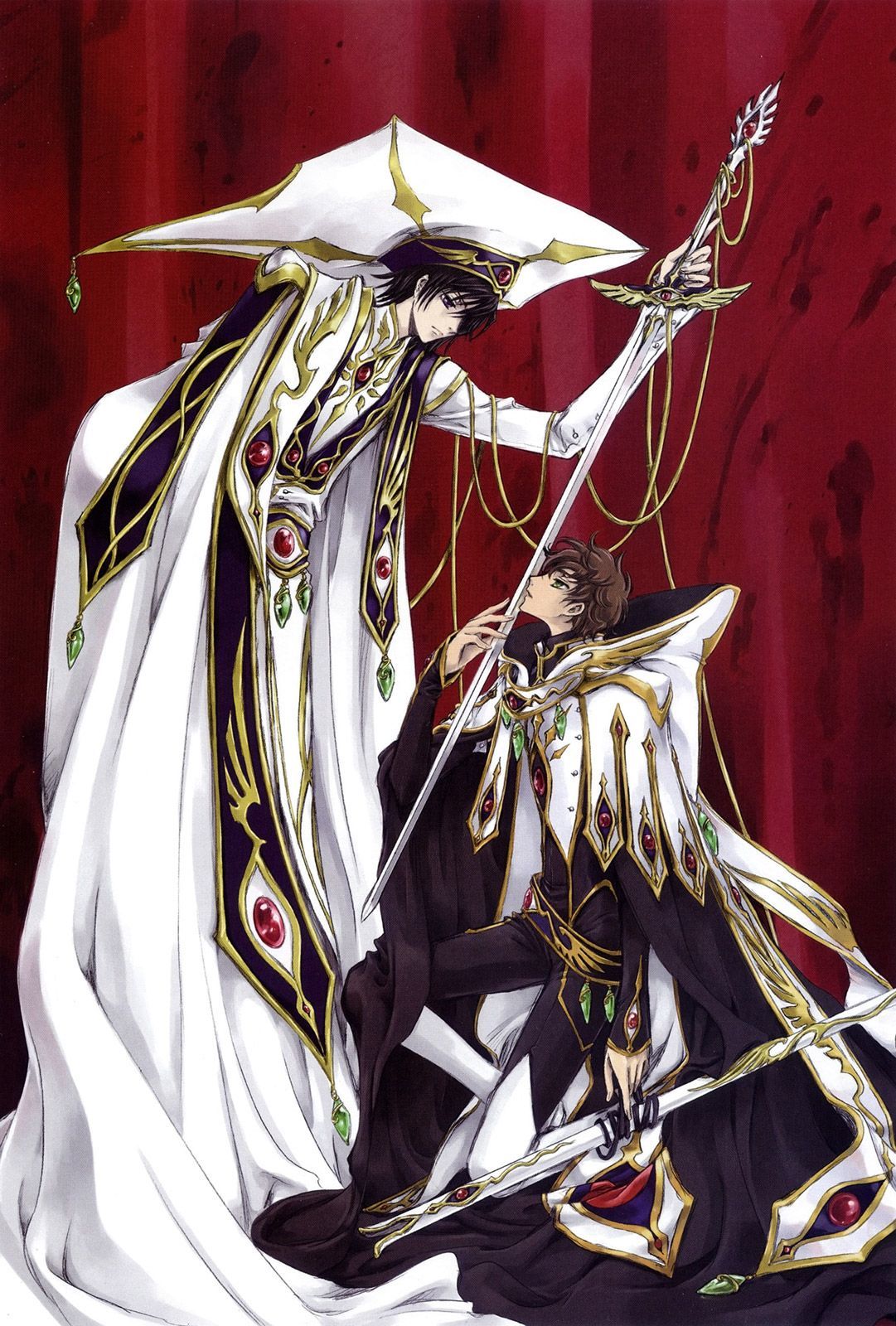
Ahem....just....kneeling to kiss his big sword there buddy? Okay, this all seems very un-suggestive. Kind of funny when Evangelion actually did have the guts to have Shinji be pretty much confirmed bisexual and get deliberately romantic scenes with a male character. Obviously Eva was hugely popular with doujinshi creators for that reason.
Yaoi is a subversion of anime and manga in a lot of ways, and so it's quite hard to parody without coming off as "ew gay stuff!", "ew erotic content made for other people's tastes!" or "ew! Women expressing sexuality in a way that isn't them being sexy for me, but sexualising and objectifying male bodies!" It was mostly women and queer people taking this content made for a cis het male audience and then turning it into an expression of their own sexual fantasies in a way that would make more mainstream anime fans uncomfortable.
I highly recommend the manga (and there's an anime) "Genshiken", for a look at what yaoi culture was like. It goes really into it, especially later on when the female characters become a more prevalent part of the series, exploring with genuine curiosity what people like about it, and not shying away from the sexual side of it, but without demonising it.